
From Studio to System:
The Rise of Computational Art Practice
Public perception of “AI art” is still read through a narrow frame, as if the work begins and ends at a prompt.
In our latest feature, we look toward the practices that have defined the last decade of computational art and trace that lineage through five Lumen Artists whose work has helped set the terms of the field: Mario Klingemann, Anna Ridler, Sofia Crespo, Sougwen Chung, and Refik Anadol.
Across their practices, the artwork exists as an evolving system rather than a fixed image. The result is a different way of understanding labour, craft, and cultural intent in the generative era.
The question that remains is not whether AI belongs within artistic practice, but how its presence reshapes the conditions under which art is made.
There seems to be a persistent unease surrounding AI art. The public imagination often settles on a single image: a prompt box, a line of text, a cascade of generated visuals, and a perceived distance from physical presence. Marco Pierre White (The ‘Godfather of Cooking’) often described the importance of a chef remaining anchored to the stove, where the work is so intense that even the sweat from the chef’s brow might fall into the pot, a visceral measure of labour that becomes inseparable from the value of what is made. He wanted the ‘chef’ inside of the food, and that seems to be a similar sentiment for AI created art.
To some, AI art feels more akin to an immediate act, while the labour behind it remains obscured and without identity - and of course any authorship or ownership removed from view. The lights remain on, but nobody is home. Yet this framing captures only a narrow surface of a much deeper field. Beneath it sits a lineage of artists who build systems, train models, construct datasets, and shape behaviours over time. Their work unfolds through iteration, technical fluency, and conceptual rigour. It demands a different vocabulary, one that recognises code, data, and computation as materials in their own right.
We wanted to explore that lineage through five pioneering practitioners whose work has helped define the early decades of AI-driven art: Mario Klingemann, Anna Ridler, Sofia Crespo, Sougwen Chung, and Refik Anadol.
Together, they map a transition from studio-based production to system-based practice, where the artist operates as engineer, curator, and collaborator.
A shifting landscape:
How AI reshaped artistic practice
The 2010s introduced two intertwined developments that reconfigured digital art. Artificial intelligence expanded the expressive ability of computational systems, while blockchain technologies introduced new models of ownership and circulation - all of this happening without big press, and much earlier to the surprise of many. Within this decade, generative art experienced rapid growth, supported by advances in machine learning and the availability of large-scale datasets.
A short timeline helps situate this transformation:
-
2011
Early machine learning aesthetics
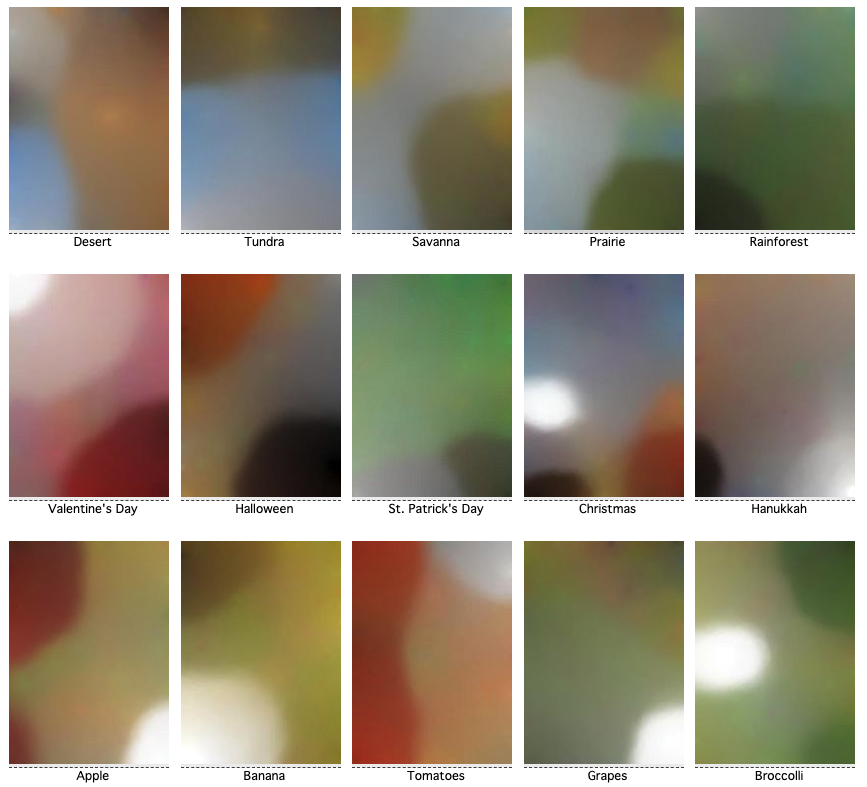
Gene Kogan’s Color of Words explored how language could be translated into visual form. By analysing image search results and clustering colour distributions using self-organising maps and Gaussian mixture models, the project revealed latent visual associations embedded within language itself. This work demonstrated how data could become both subject and medium. -
2012
Deep learning becomes operational
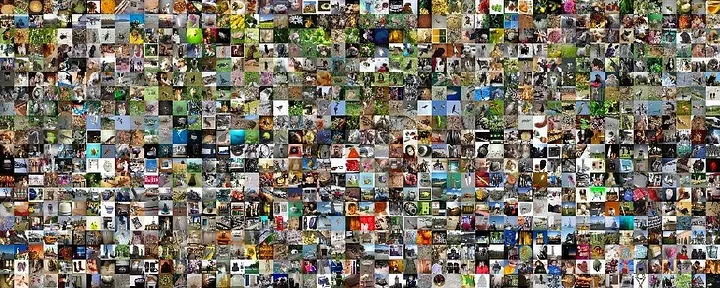
The success of deep convolutional neural networks in the ImageNet challenge marked a turning point for machine vision. These systems enabled computers to interpret images with unprecedented accuracy, establishing the technical foundation for later artistic experimentation. The layered structure of these networks allowed increasingly complex representations to emerge through training.
-
2013
Coding as a creative language
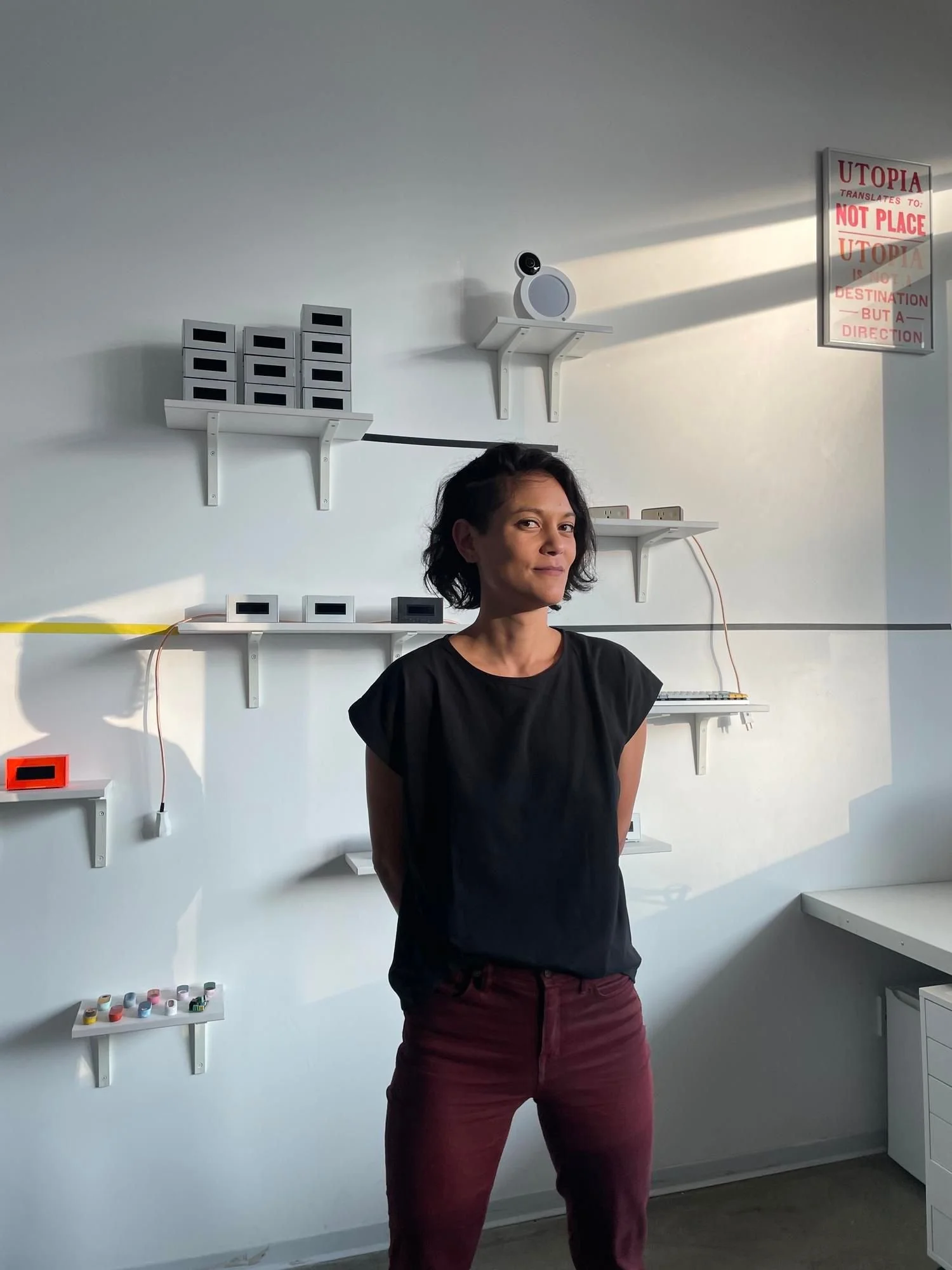
Lauren Lee McCarthy’s development of p5.js expanded access to creative coding. By bringing visual programming into the browser, p5.js supported a generation of artists who approached code as a material rather than a tool. It reinforced the idea that artistic practice could be written, executed, and shared through software.
GANs introduced new methods of image synthesis, while artists began to explore neural networks as collaborators rather than instruments. Within this environment, a set of practitioners emerged whose work continues to shape how AI art is understood today.
Mario Klingemann
Systems that dream, drift, and destabilise
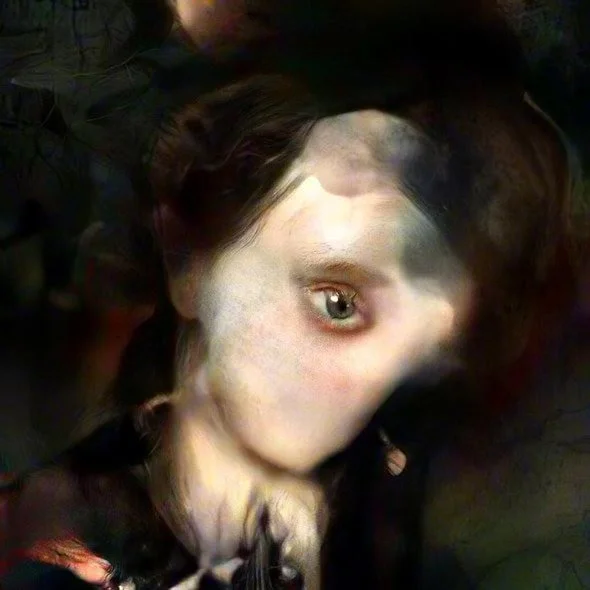
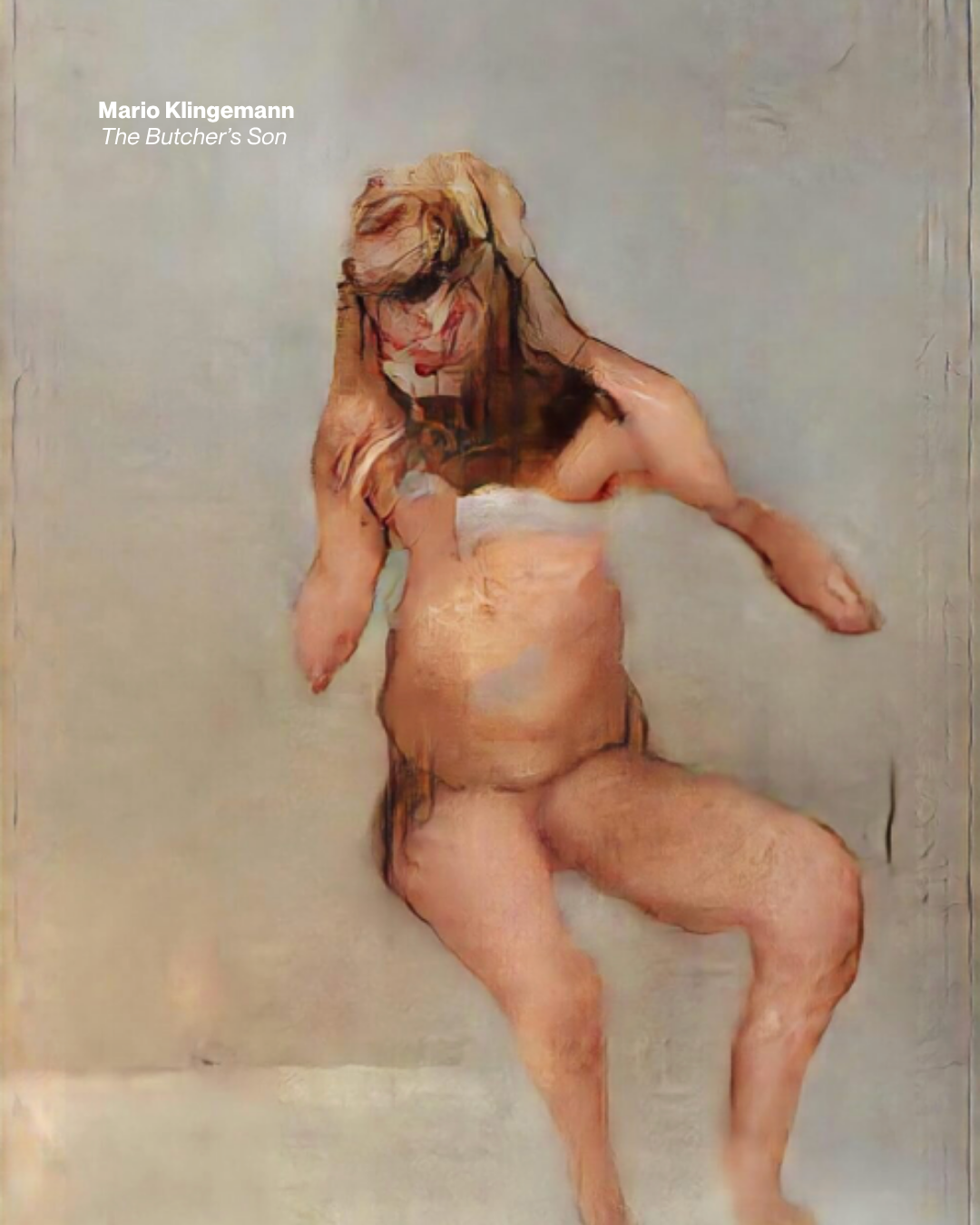
Born in Germany in 1970, Klingemann has become one of the most influential figures in AI art. His practice centres on neural networks, particularly generative adversarial networks, which he trains on carefully selected image datasets. These datasets often draw from art history, portraiture, and archival material, embedding cultural memory within computational systems.
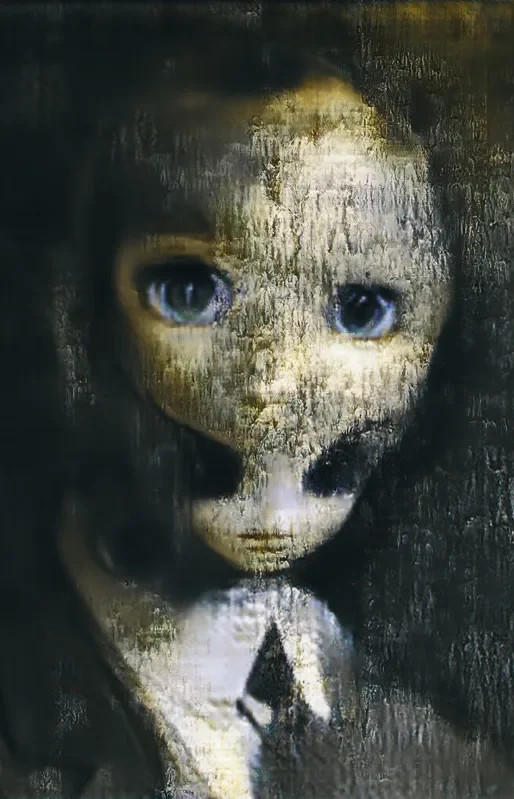
His work treats latent space as a territory to be explored. Within this space, the network encodes relationships between forms, textures, and structures. Klingemann moves through this space, looking for moments where familiar images begin to blur. Faces appear, break apart, and come back together, creating something that feels both recognisable and unstable.
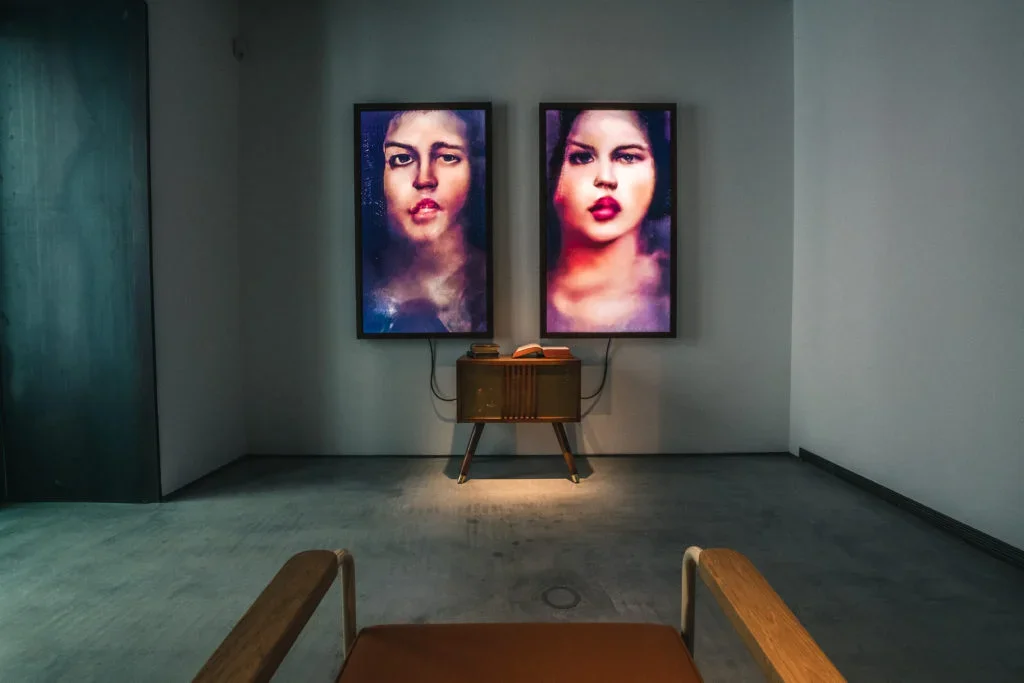
In Memories of Passersby I, an installation that generates portraits continuously, the artwork exists as an ongoing process. Each image appears only once, then disappears. The system produces an endless flow of visual possibilities, shifting the artwork from object to behaviour.
Klingemann’s approach reframes authorship as a dialogue between artist and machine. He designs the system, guides its parameters, and curates its outputs. The act of selection becomes central, transforming the artist into a navigator of generative space.
Mario won the 2018 Lumen Prize Gold Award (2018).
Anna Ridler
Labour, authorship, and the dataset as artwork
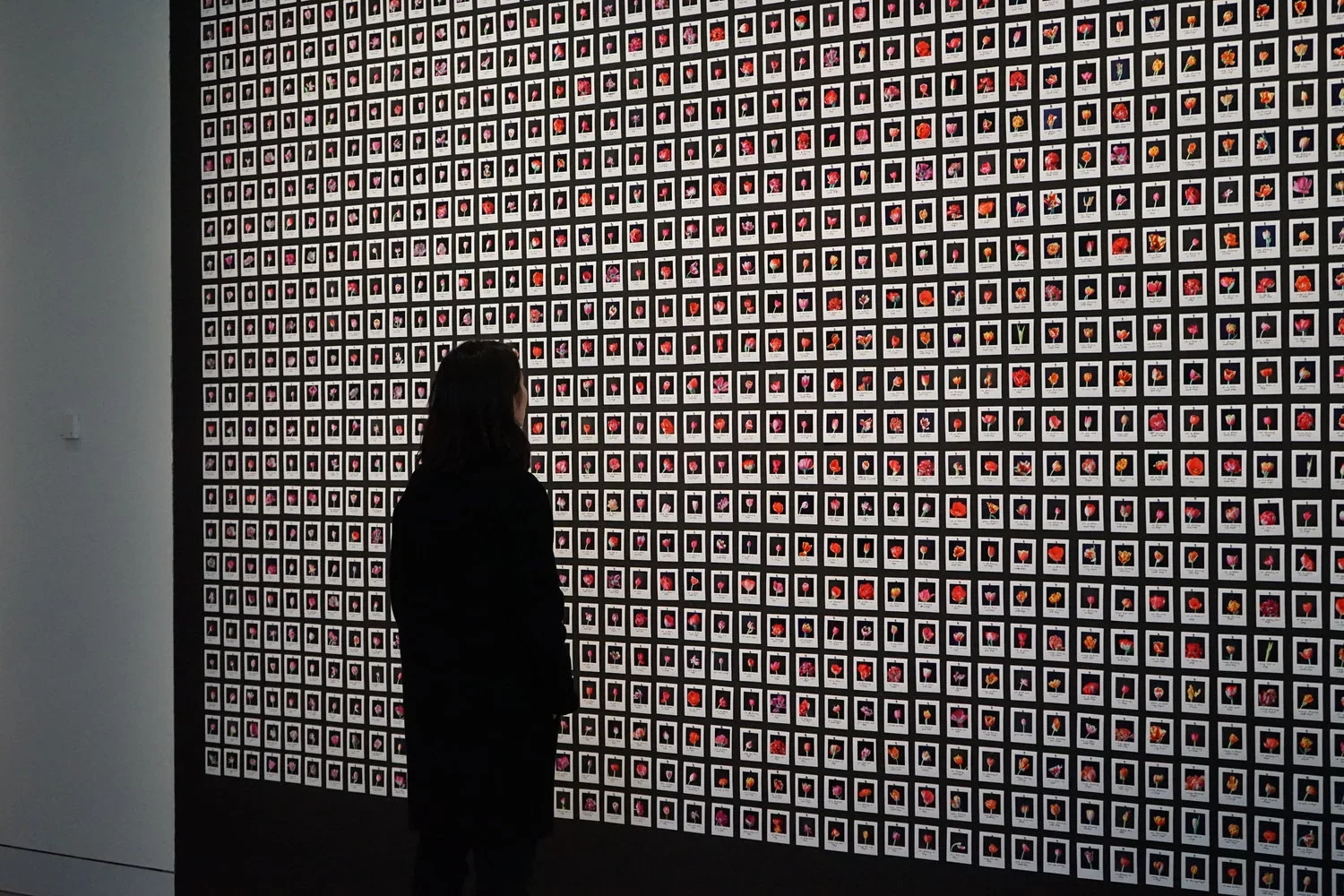
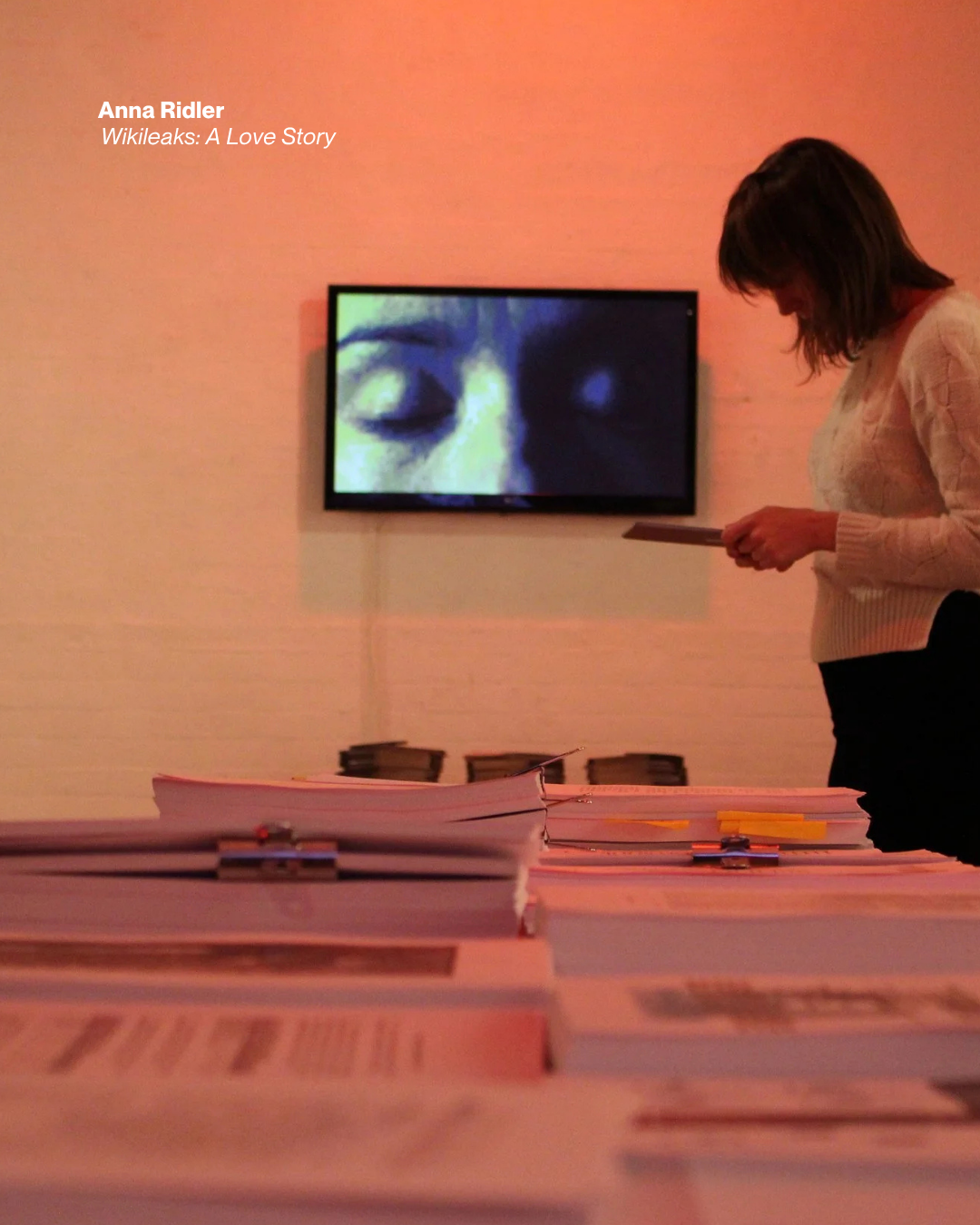
Anna Ridler’s work introduces a different rhythm into AI art. Time, repetition, and manual effort are essential components of this work. Based in London, she constructs her datasets by hand, often producing thousands of drawings or photographs that are then used to train machine learning models.
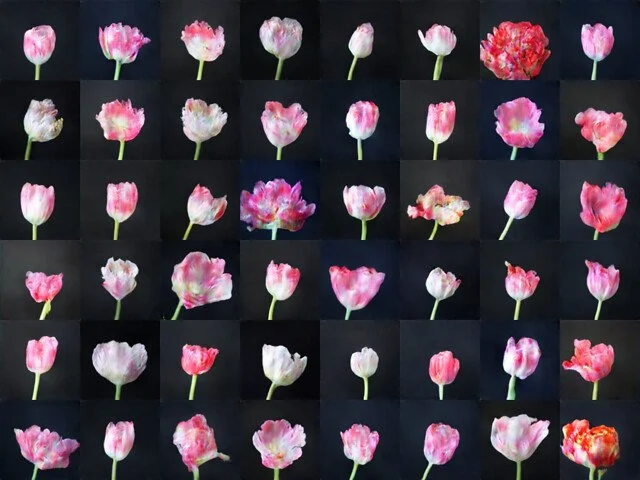
Her project Mosaic Virus draws on the history of tulip mania, linking speculative markets in the seventeenth century with contemporary cryptocurrency systems. Each tulip image within the dataset is created individually, embedding hours of labour into the training material. The resulting outputs carry this history within them, shaped by the constraints and decisions of the dataset itself.
Ridler’s practice foregrounds the human effort that underpins machine learning. Data becomes visible as a site of authorship, where choices about inclusion, categorisation, and representation shape the final work. Her approach invites a reconsideration of value, situating labour at the centre of computational art.
Anna was a 2017 Lumen Prize Finalist (XR/AR Award).
Sofia Crespo
Reimagining nature through machine perception
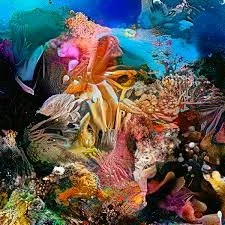
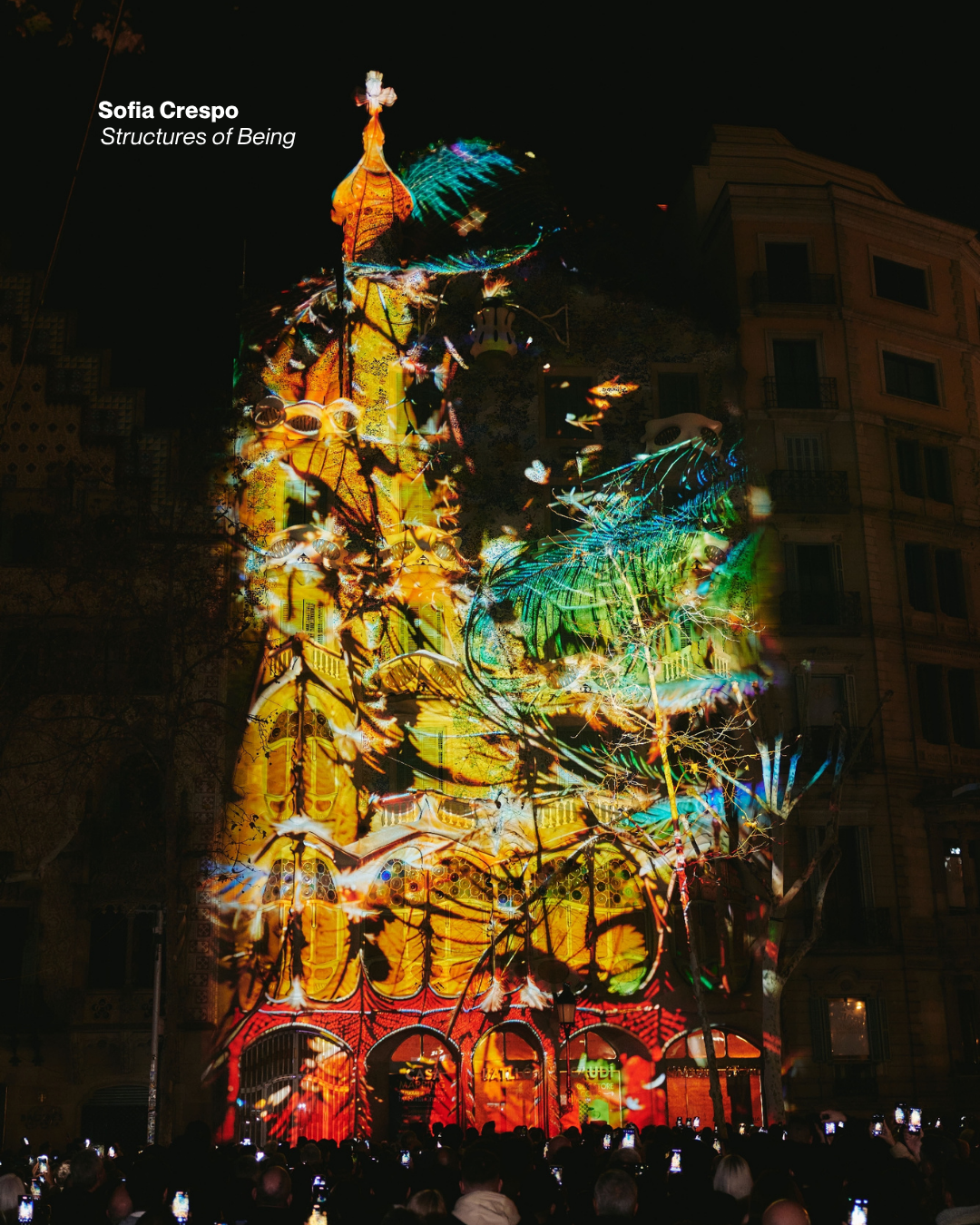
Working independently and as part of the duo ‘Entangled Others’ with Feileacan McCormick, Crespo explores the intersection of artificial intelligence and biological systems. Her work draws from natural history archives, ecological datasets, and scientific imagery, using these materials to train models that generate speculative life forms.
The resulting images resemble insects, corals, and hybrid organisms that appear plausible within the logic of evolution. They carry structural coherence, suggesting that the system has internalised aspects of biological organisation. At the same time, they introduce forms that do not exist, expanding the boundaries of what nature might become.
Crespo’s practice examines how machines interpret the natural world. The datasets she employs reflect human processes of classification and documentation, which in turn shape the system’s outputs. Her work reveals how machine vision constructs its own understanding of life, mediated through the data it receives.
In the context of climate discourse, these images resonate as both documentation and speculation. They invite reflection on biodiversity, extinction, and the role of technology in shaping ecological futures.
Entangled Others won the 2025 Lumen Prize Nature & Climate Award.
Sougwen Chung
Drawing as collaboration between human and machine
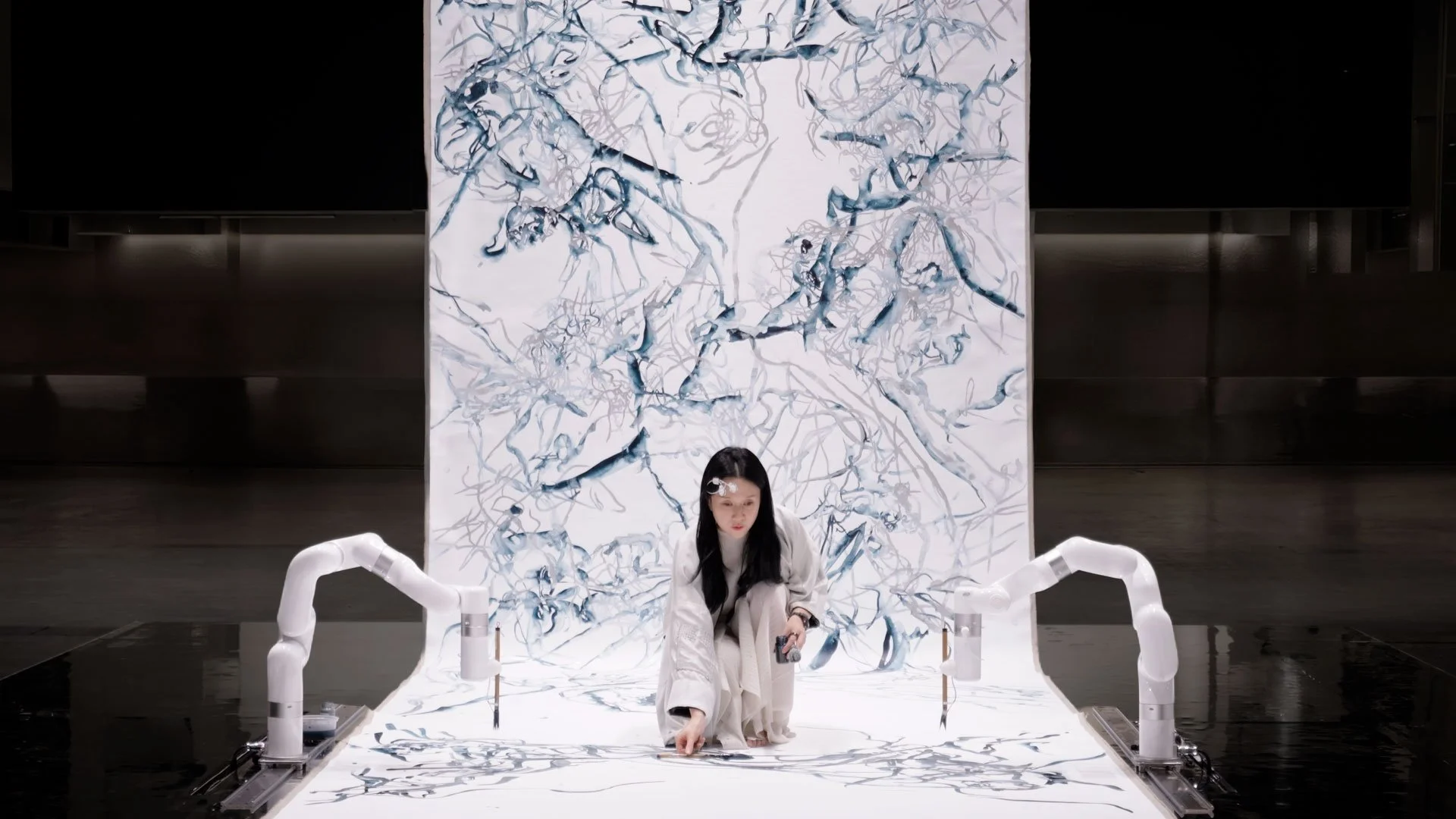
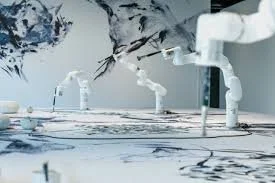
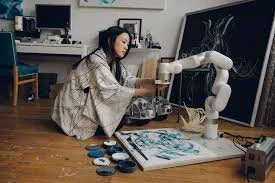
Sougwen Chung’s work unfolds through performance, where drawing becomes a shared activity between human and machine. Their systems are trained on archives of their own mark-making, allowing robotic arms to generate lines that echo their style.
In live performances, Chung draws alongside these machines. The interaction produces a feedback loop, where each gesture influences the next. The resulting images carry traces of both participants, blending human intention with computational response.
This practice positions AI as a collaborator with agency. The machine operates within learned parameters, yet introduces variation and unpredictability. Drawing becomes an evolving conversation, extending beyond the individual artist.
Chung’s work expands the definition of artistic practice to include interaction, embodiment, and real-time exchange. It situates computation within the physical space of performance, where code translates into movement and mark.
Sougwen won the 2019 Lumen Prize Still Image Award.

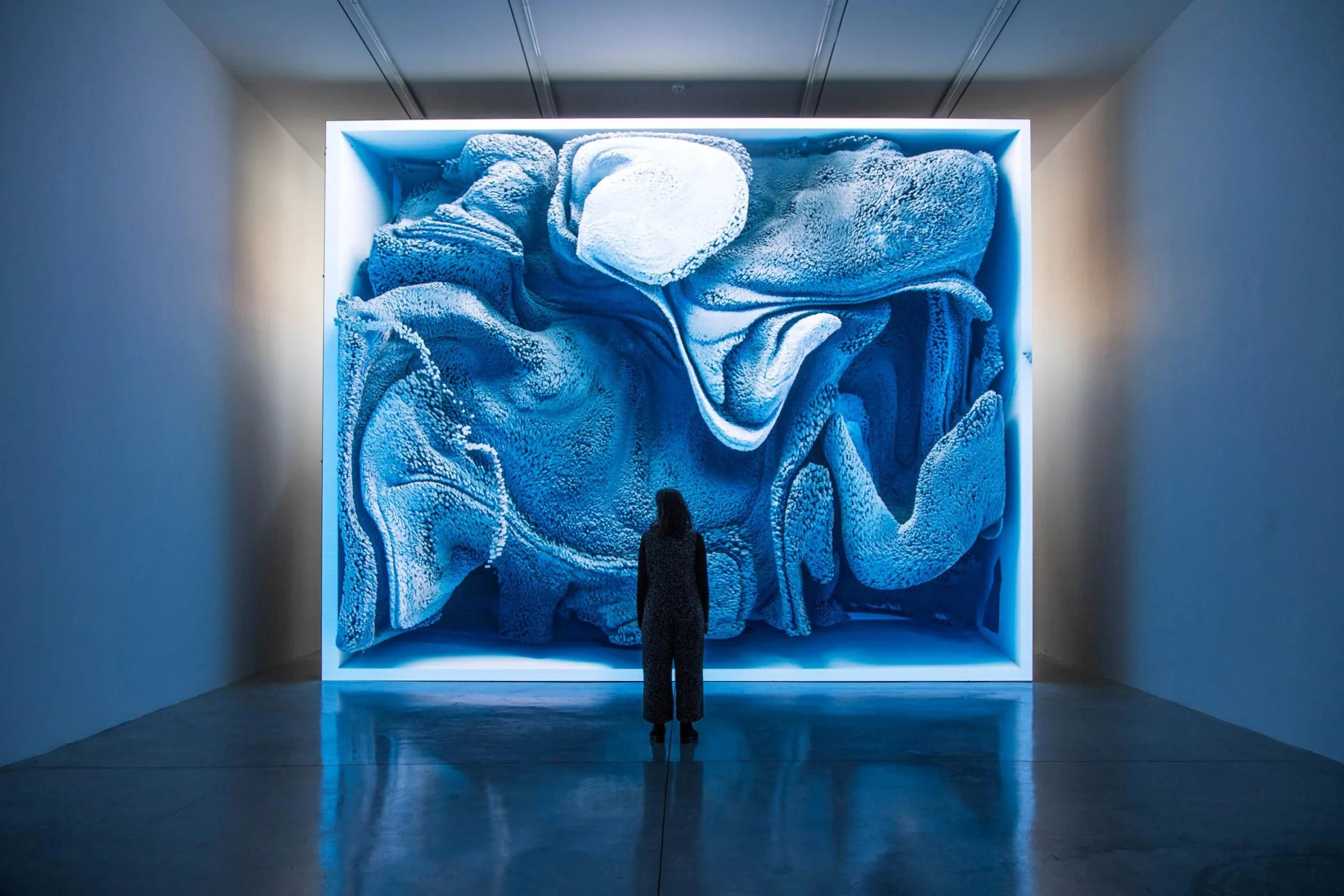
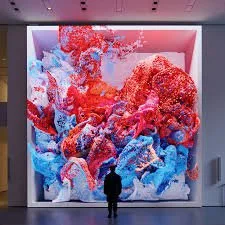
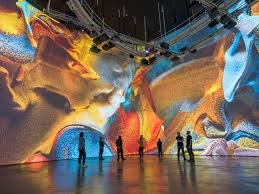
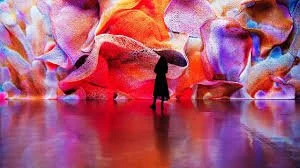
Refik is known for transforming vast datasets into immersive, sensory environments. His practice treats data as raw material, what he often calls a kind of “paint” - using machine learning algorithms to process and visualise millions of data points into dynamic and ever-evolving artworks.
His works are typically architectural in scale, unfolding across entire rooms, buildings, or public spaces. Through projection, sound, and sometimes even scent, they envelop the viewer turning static data into something spatial and experiential.
Rather than presenting data as information, Anadol reimagines it as memory, dream, and emotion. In projects like Machine Hallucinations and Unsupervised, AI systems “interpret” archives whether millions of photographs or centuries of art history - producing fluid, abstract visualisations that feel less like analysis and more like machines imagining the world.
At the core of his practice is a simple but radical idea: what if machines could remember, dream, and feel, and what would that look like in space?
Refik won the 2019 Lumen Prize Gold Award.
Refik Anadol
Art, data, and machine intelligence.
Toward a new definition of artistic practice.
Across these artists, a shared set of concerns emerges. Each engages with systems rather than static outputs. Each treats data as a material that carries meaning and history while exploring authorship as a distributed process that unfolds across human and machine.
This shift has implications for how art is produced, experienced, and valued. The studio expands into a computational environment, where code, datasets, and models operate as core components of practice. The artwork evolves over time, shaped by parameters, inputs, and interactions.
The current discourse around AI art often focuses on immediacy and automation. These artists offer a different perspective, with a particular focus on experimentation. Their work reflects the early years of the AI age, a period defined by exploration, pushing of guardrails and the gradual emergence of new forms.
As this field continues to develop, the role of the artist as engineer becomes increasingly visible. Coding functions as both language and medium, enabling the construction of systems that generate, respond, and transform. Within this landscape, art takes on new dimensions, extending beyond objects into processes that unfold across time and computation.
The question that remains is not whether AI belongs within artistic practice, but how its presence reshapes the conditions under which art is made. These artists provide a framework for understanding that transformation, offering a vision of art that is deeply intertwined with the technologies that define its moment.