
Detective Deduction
CHOU Man-nung
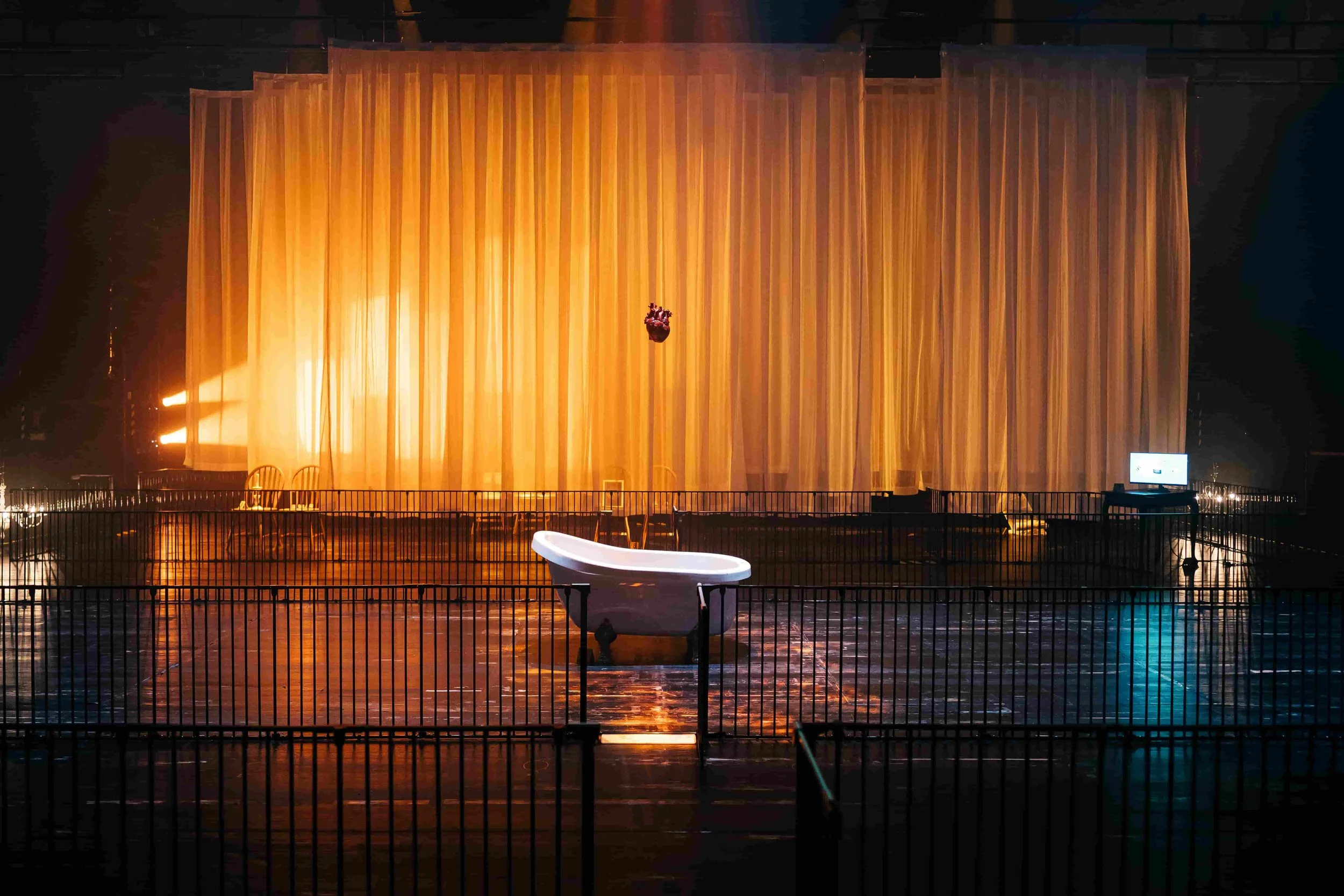
Artwork Description:
Detective Deduction begins where most immersive works end. Audiences don't enter a completed world — they rise through it, carried on a freight elevator that shakes and exhales smoke, ascending from the theater's loading dock into the stage itself. This entry is not metaphor. It is the work's first statement. Theater has always been a machine — an ancient technology for mobilizing perception. Detective Deduction takes this literally. Rather than concealing the Grand Theater of National Taichung Theater's infrastructure behind illusion, the work makes the building's skeleton its primary creative material: freight lifts, acoustic shells, curtain lines, fly systems. The theater itself — its full infrastructure — is the largest performer. Without the specific constraints and possibilities of this machinery — integrated with custom-built automated walls, multi-layered projection, spatial sound, and installation — these rooms could not exist in this form. Ten fictional detectives' rooms inhabit the theater's full spatial range — stage, side stages, backstage, auditorium, and orchestra pit. Each room externalizes a distinct interior world: a laundry room where the dead gather at night — the vibration of washing machines carrying their presence, opening a passage across time and space; a void constructed entirely from the theater's massive acoustic shells, repurposed as a sound installation where visitors listen for their own echoes; a train station and convenience store concealed in the lower level of the flanking platforms, visible only as the central platform descends — the surrounding height differential making them appear, as if rising to meet the audience rather than being sought out. In the final sequence, audiences enter the auditorium itself, now transformed into the room of a detective who investigates by building crime scene models: five motorized walls move among rows of red seats, and miniature worlds wait to be discovered. No room announces itself. Each is revealed by the machinery — as if it is the spaces, not the audiences, that do the discovering. As platforms rise, hidden spaces are revealed; as rigging shifts, objects recombine. Audiences are carried — ascending, descending — through the spatial narrative. Mechanical movements sometimes occur in plain sight; sometimes audiences discover the space has already changed. This designed uncertainty is not atmosphere — it is structure. It places audiences in the epistemic condition of a detective: the scene has been altered, and only activated perception can reconstruct what happened. Without tasks to perform or mysteries to solve, audiences move through a dreamlike world built from the integration of machinery, moving image, sound, and installation. They become investigators of their own responses, memories, and associations — the search for what is real inevitably leads inward.
Project Collaborators:
2021-2022 National Taichung Theater(NTT) Artists-in-Residence Program CHOU Man-nung ; Commissioned & Organised Production: National Taichung Theater; Production: Baroquemachine Lab; Concept, Director, Scriptwriter: CHOU Man-nung ; Space, Mechanism Design & Overall Planning of New Media Technology: CHANG Huei-ming ; Assistant Director: WU Zi-jing; Composer: LIU Wei-chih ; Music Design: LIU Wen-chi ; Lighting Design: WU Hsia-ning ; Graphic Design: YANG Shi-ching ; Costume design: LIN Hsin ; Overall planning of Space Furnishings & Model Making coordination: TSAI Chuan-ren ; Performers: Yang Qi-yin, Fly WU ; Stills and performance video: TANG Chien-che ; Producer: LAN Hao-chih ; Executive Producer: HSU Pei-ching, LIU Tung-yu ; Stage Manager: CHEN Cheng-hua, WU Zi-jing ; Stage Technical Director: CHEN Ren-shuo ; Lighting Technical Director: Phoebe CHEN ; Sound Engineering: LAI Wei-yu ; Space Furnishings & Model Making/House Peace
