CONTROL NEGATIVE
Monika Masłoń
Artwork Description:
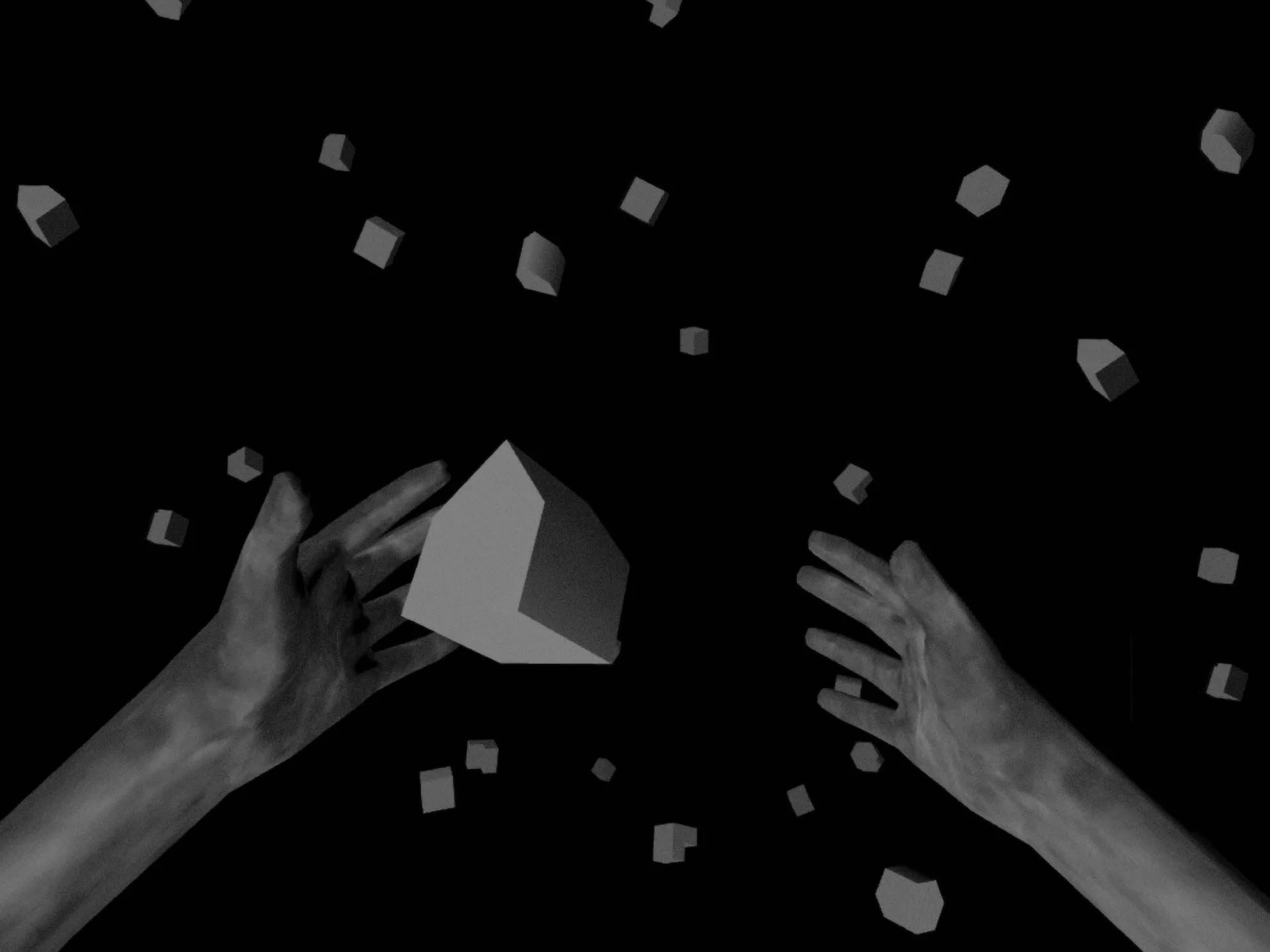
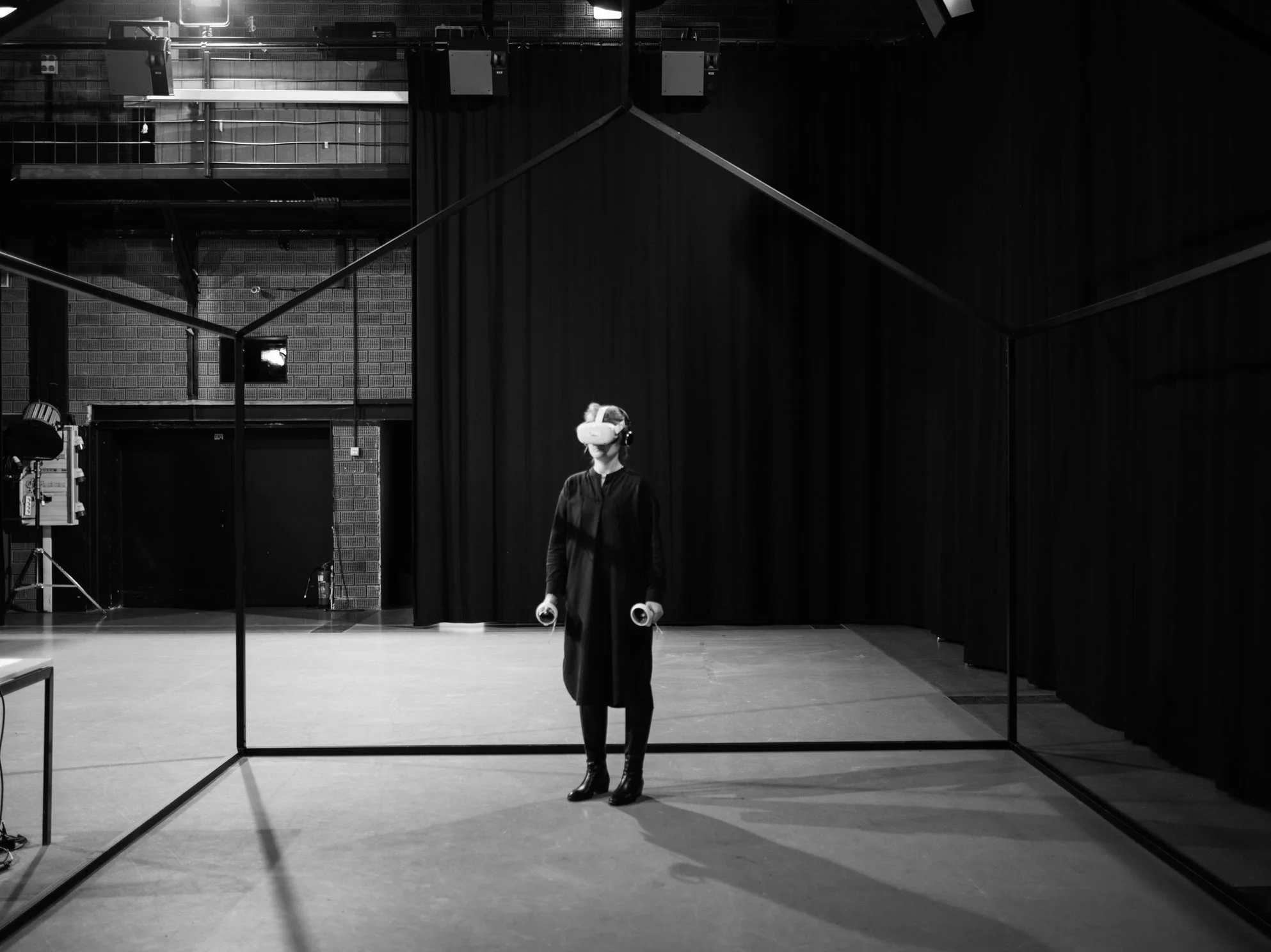
CONTROL NEGATIVE is an immersive 6DoF VR installation that transforms disruption into method. The experience begins by entering a minimal house-shaped structure, a physical threshold mirrored in virtual space. Moving through both environments simultaneously, the participant enters a sequence of seven chapters in which familiar rules gradually stop applying. Agency is progressively withdrawn throughout the experience. Objects fuse to the participant’s hands, walls become permeable, interaction loses reliability, and the world stops responding as expected. Delay, misalignment, and moments of dysfunction become expressive tools instead of technical failures. The visual language is achromatic and reduced, a world rendered like a photographic negative where familiar forms become legible but strange. CONTROL NEGATIVE combines generated and recorded imagery, moving between geometric abstraction and recognisable spaces. The recurring motif of the house appears across changing scales and states: first as a physical structure, then as a geometric outline, an object, a room, and later as a permeable wireframe environment. Gradually, the house gains weight until its dark form expands and absorbs the participant. In the final chapter, earlier forms and shapes return as drifting objects, responding only to slow and delicate gestures. Inspired by moments when virtual reality reveals its own constructed nature, CONTROL NEGATIVE uses the mechanisms of immersive media to make loss something the body moves through, not something the mind observes.
Project Collaborators:
CONTROL NEGATIVE was created by Monika Masłoń and produced at the Visual Narratives Laboratory (vnLab), VR/AR Studio of the Polish National Film School in Łódź. The project was developed through interdisciplinary collaboration combining artistic research, immersive storytelling, interaction design, and virtual production. Directed by Monika Masłoń and co-written with Rafał Kotas, the work brought together collaborators across programming, sound, spatial design, and performance. Core creative collaborators included Marcin Puchalski (Unity programming and interaction development), Adam Kosiewicz (3D modelling), Kajetan Zakrzewski (sound design and field recordings), Karolina Rec / Resina (music), Konrad Ziaja (camera), and Julia Kolberger, Włodzimierz Press, and Richard Bialy (voice performance). Creative production by Pola Borkiewicz and Jacek Nagłowski. Produced by Krzysztof Franek and Krzysztof Pijarski. Executive production by Agnieszka Sural (Fundacja Witryna), with development support by Tomasz Filiks (Kijora).