
2026 Legacy Futures Award Finalists
For works that sit at the intersection of reflection and anticipation — engaging past, present, and future in ways that examine our relationship to technology, culture, and time. This category is defined not by medium, but by how a work engages with time, memory, and future possibility.
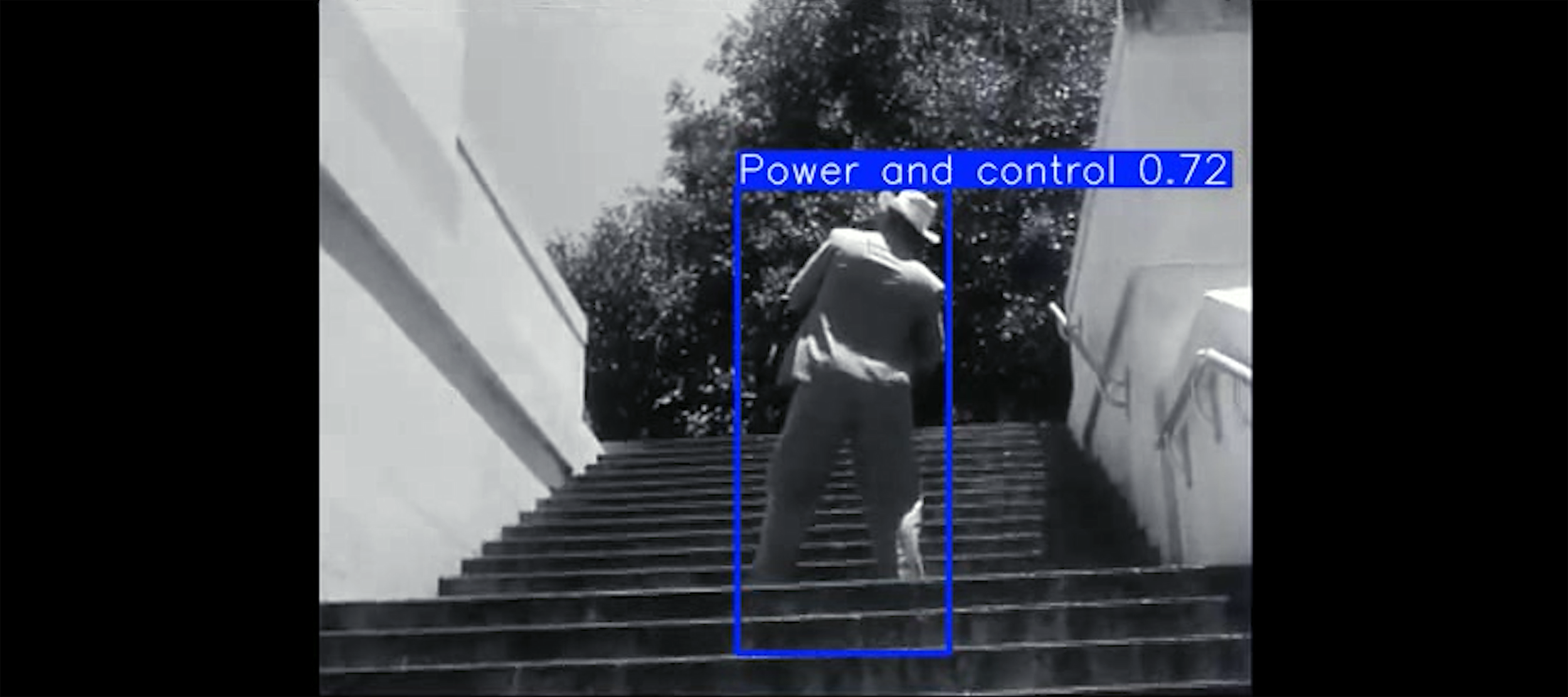
The Innocence of Unknowing
Ryat Yezbick and Milo Talwani
The Innocence of Unknowing is an AI-driven film and performance project that investigates how mass shootings are mediated, framed, and normalized through broadcast news. Using an AI they trained to think like a humanities scholar, the artists examine media from the 1960s to 2025.

Alternative Computations — Worlds Otherwise Calculated
Ryuta Aoki
Quantum noise becomes rain in a universe inspired by vernacular cultures of computation. Rods trace the 28 Lunar Mansions; tatami and reeds ground sky, earth and human. Embodied ritual gestures attune the installation. Every 28 minutes, a sonic ecology is reborn.
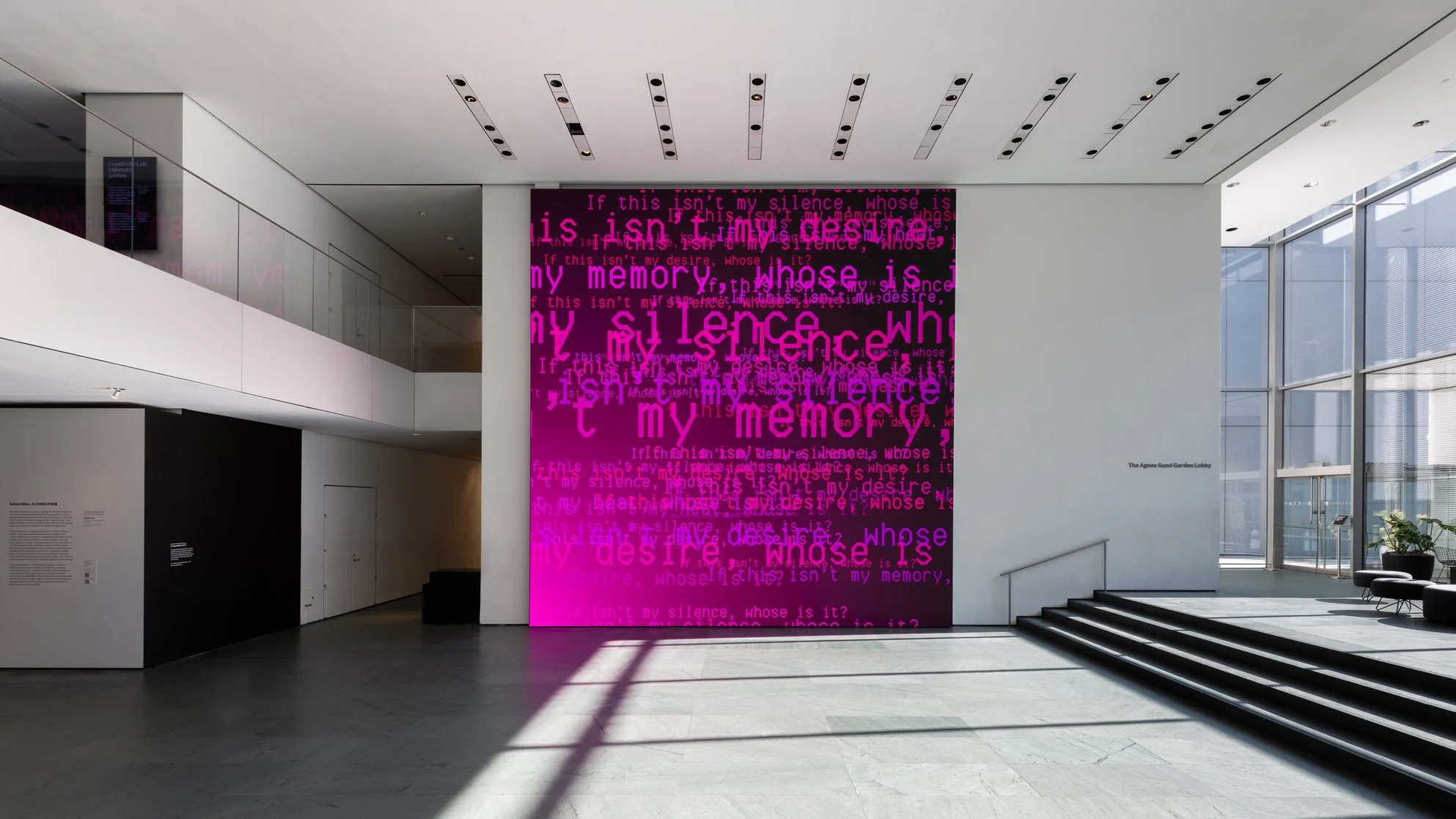
A LIVING POEM
Sasha Stiles
An immersive generative language environment that advances poetry as a defining medium of the 21st century, and explores “poetic intelligence” (the intertwining of emotion and algorithm to make meaning) as a model for how technology can deepen, rather than diminish, our humanity.
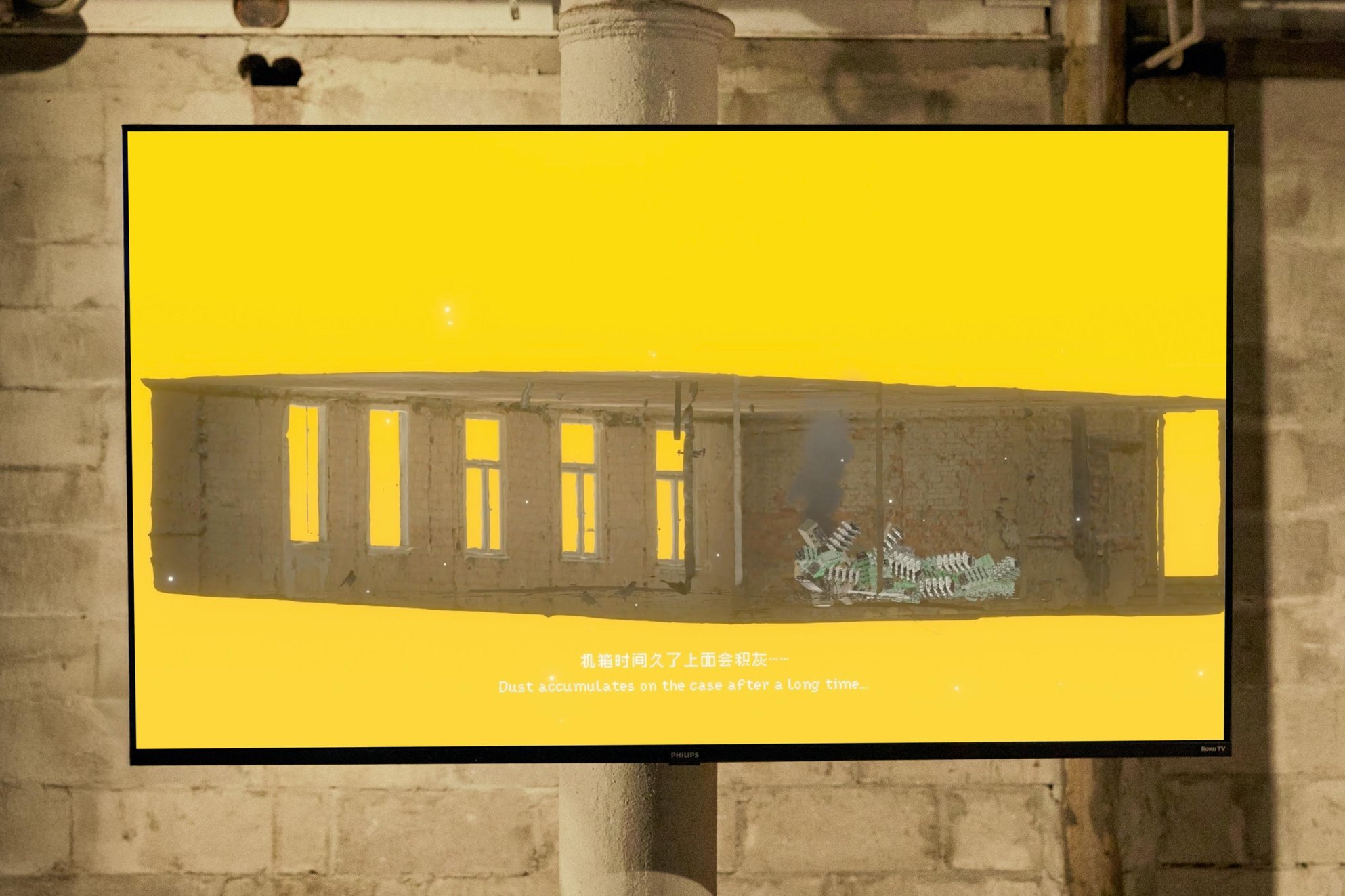
The Graceful Site
ShanMu Weitong Sun and Ruiqi Zhang
A minimal theater within a game engine foretells the failed future of automation and sketches an alternative trajectory for artificial intelligence.
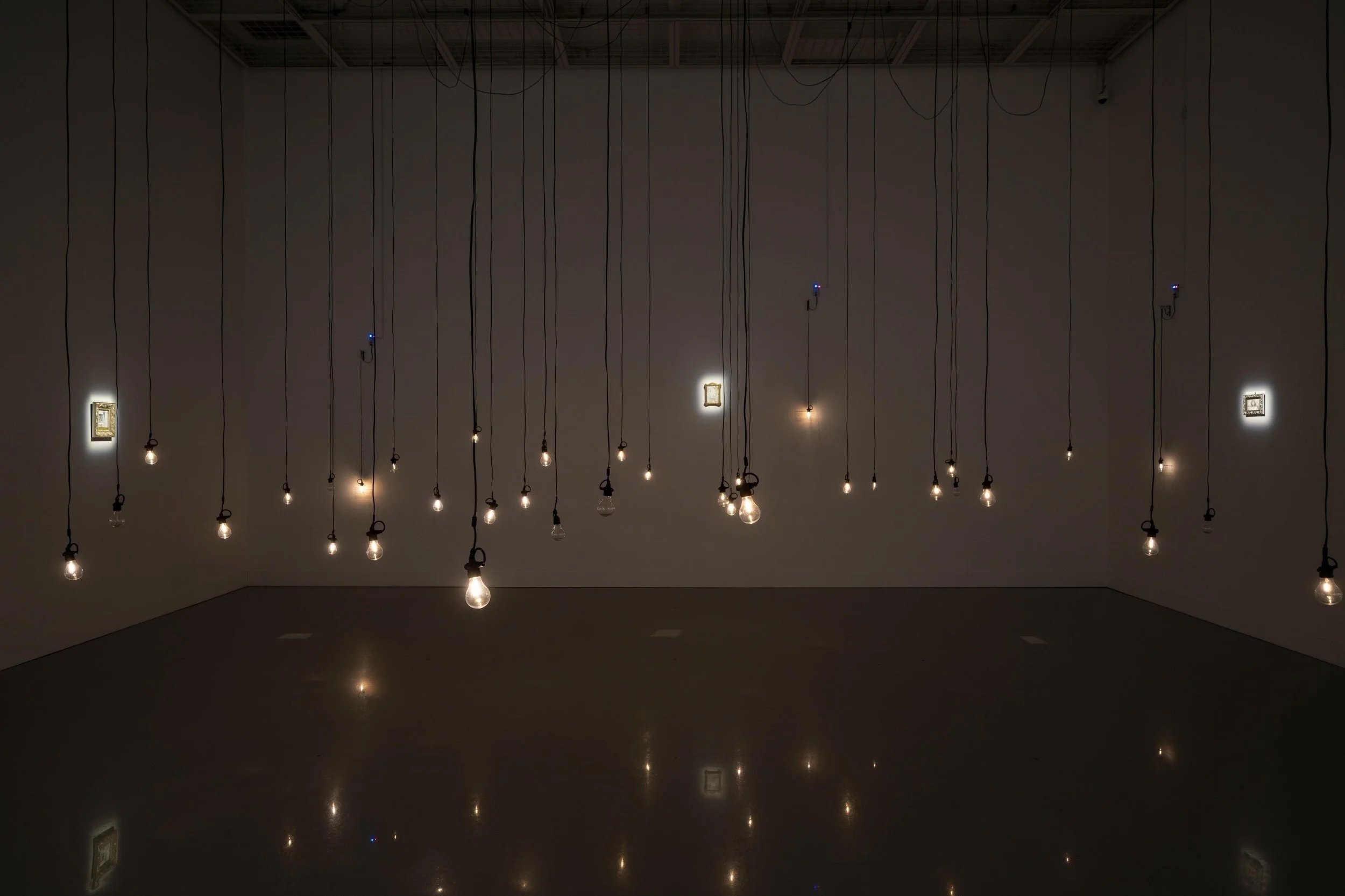
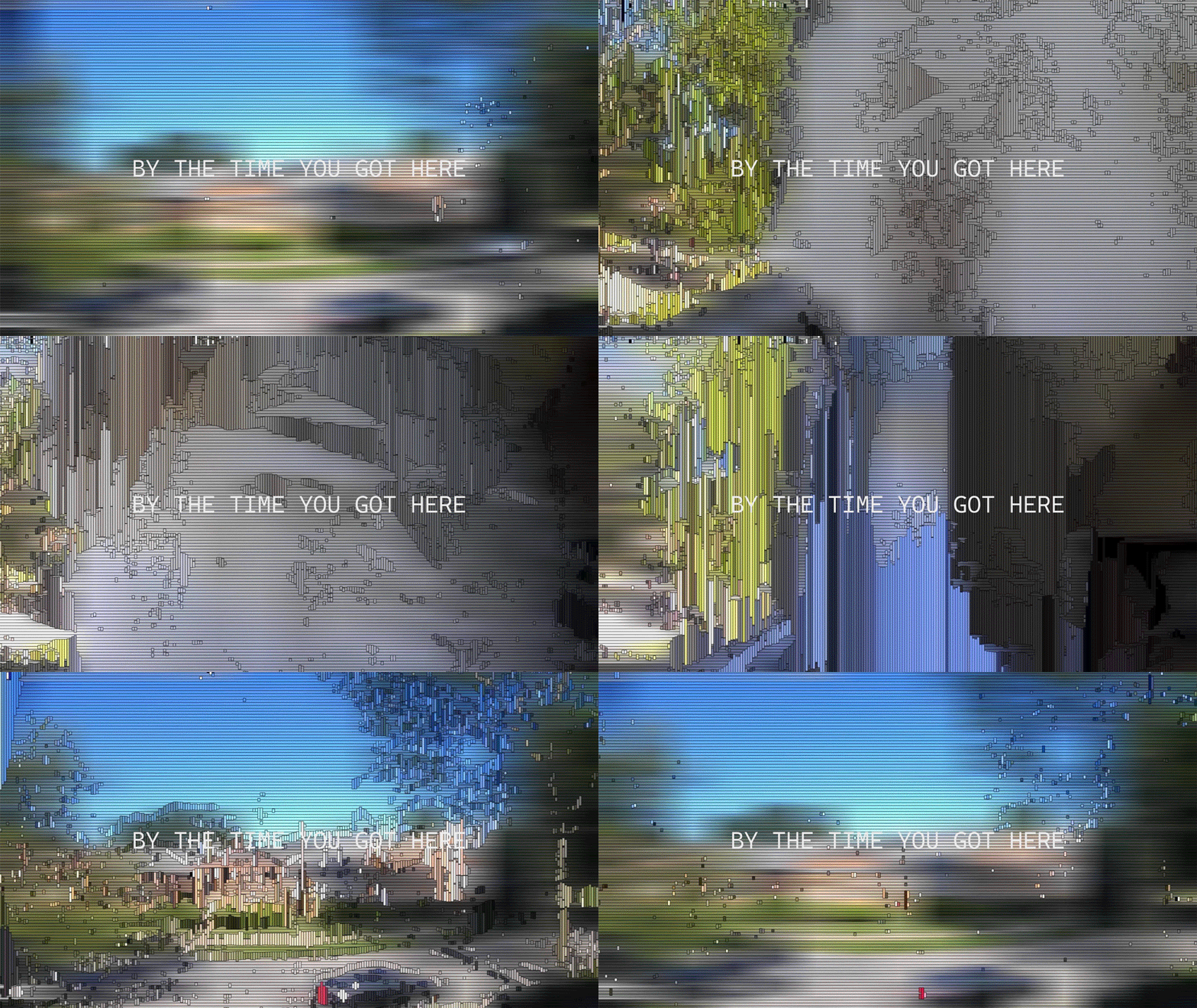
By the Time You Got Here
Willea Zwey
A 24/7 live generative system structurally designed to fail at perfect preservation by turning live footage into algorithmic abstraction and AI synthesis while withholding archival access. With intentional data decay, it contemplates modern digital preservation and human memory.
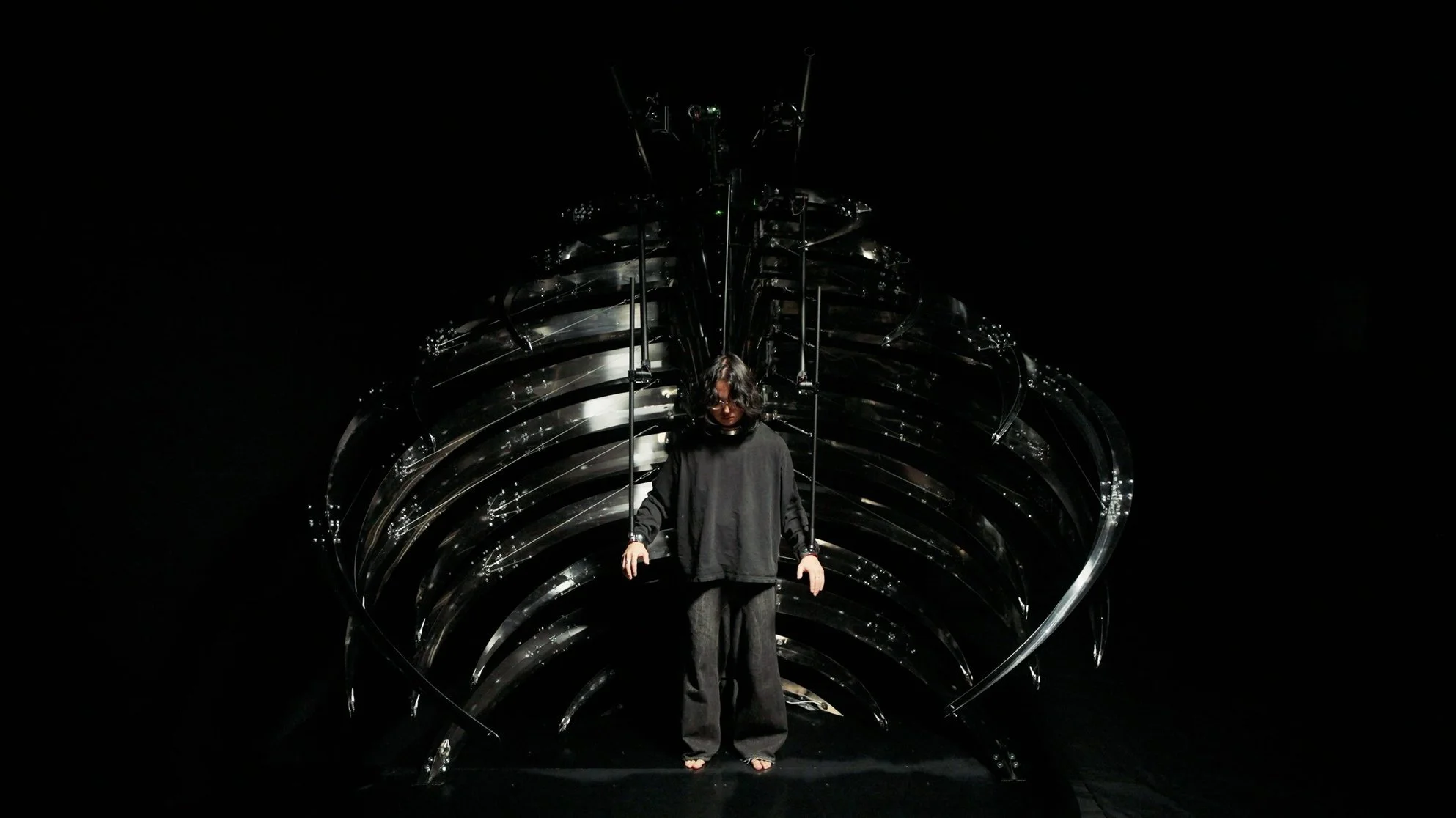
xoxo-skeleton
Yuma Kishi
xoxo-skeleton inverts the human-AI relation. Inside a 2.5-meter ceremonial ribcage, MaryGPT, a model trained on Shelley's Frankenstein, moves the wearer through robotic arms, slowing our daily surrender of judgment to AI into a rite one body can feel.
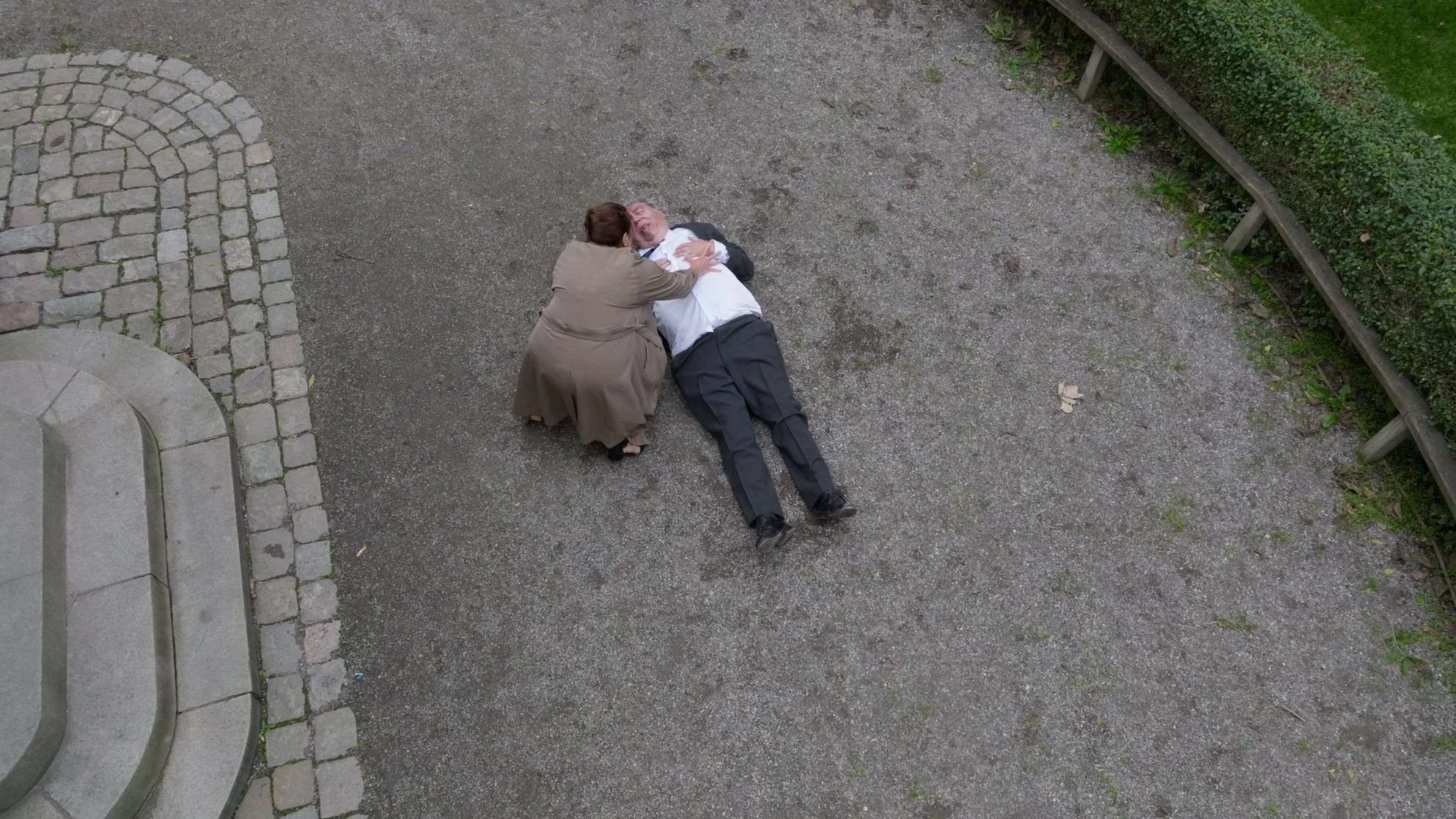
Gravity Will Take Us All
Zeno Gries
Norbert Wiener, the originator of cybernetics and foundational thinker for artificial intelligence, is conjured from the dead as a machine learning model to reflect on the legacy of his theories and relive his death.