
2026 Student Award
Sponsored by HKUST
The Lumen Prize Student Award celebrates emerging artists developing ambitious work with technology while still in education.
Each year, one artist receives the $2,000 Student Award and joins the Lumen Artist Community.
While the Student Award doesn’t have a finalist list, we wanted to recognise some of the exceptional work that rose to the top of this year’s judging. The works featured here are the highest-scoring submissions to the 2026 Student Award, placing within approximately the top 3–4% of entries reviewed by our judges.
Huge congratulations to everyone who submitted their work this year. The winner of the 2026 Student Award will be announced at our Awards Ceremony in November.
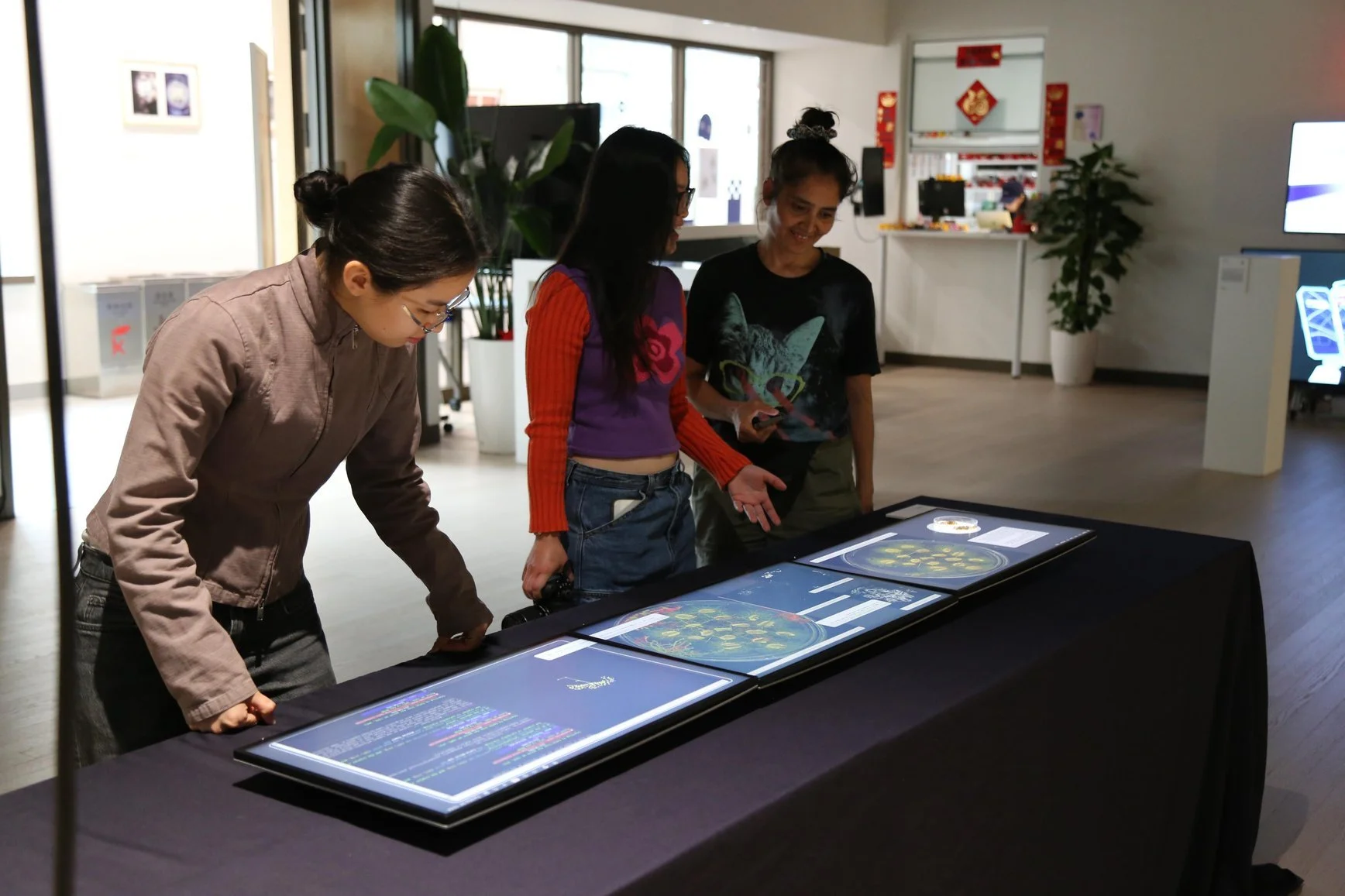
Nature.exe
Yanrui Shao, Delft University of Technology (TU Delft)
Reimagining web typology by drawing on the decentralized, adaptive intelligence of slime mold from a posthuman perspective.
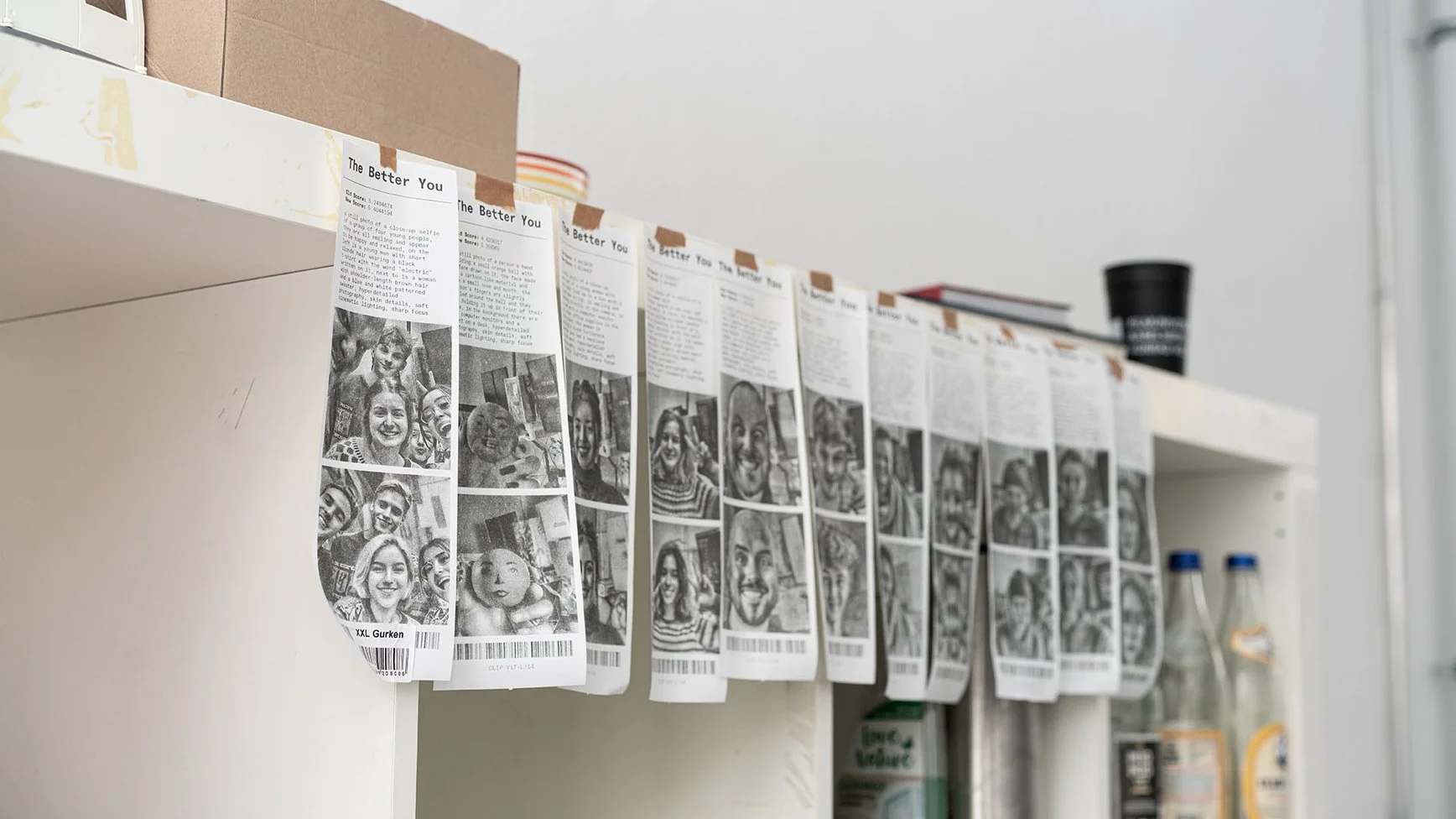
The Better You
Wilhelm Tischbein, Burg Giebichenstein University of Art and Design Halle
»The Better You« deconstructs AI aesthetics. An interactive digital mirror scores your face against AI datasets (1-10) and live-overwrites human flaws with a statistically smooth clone. A printed receipt documents this forensic encounter of synthetic homogenization.
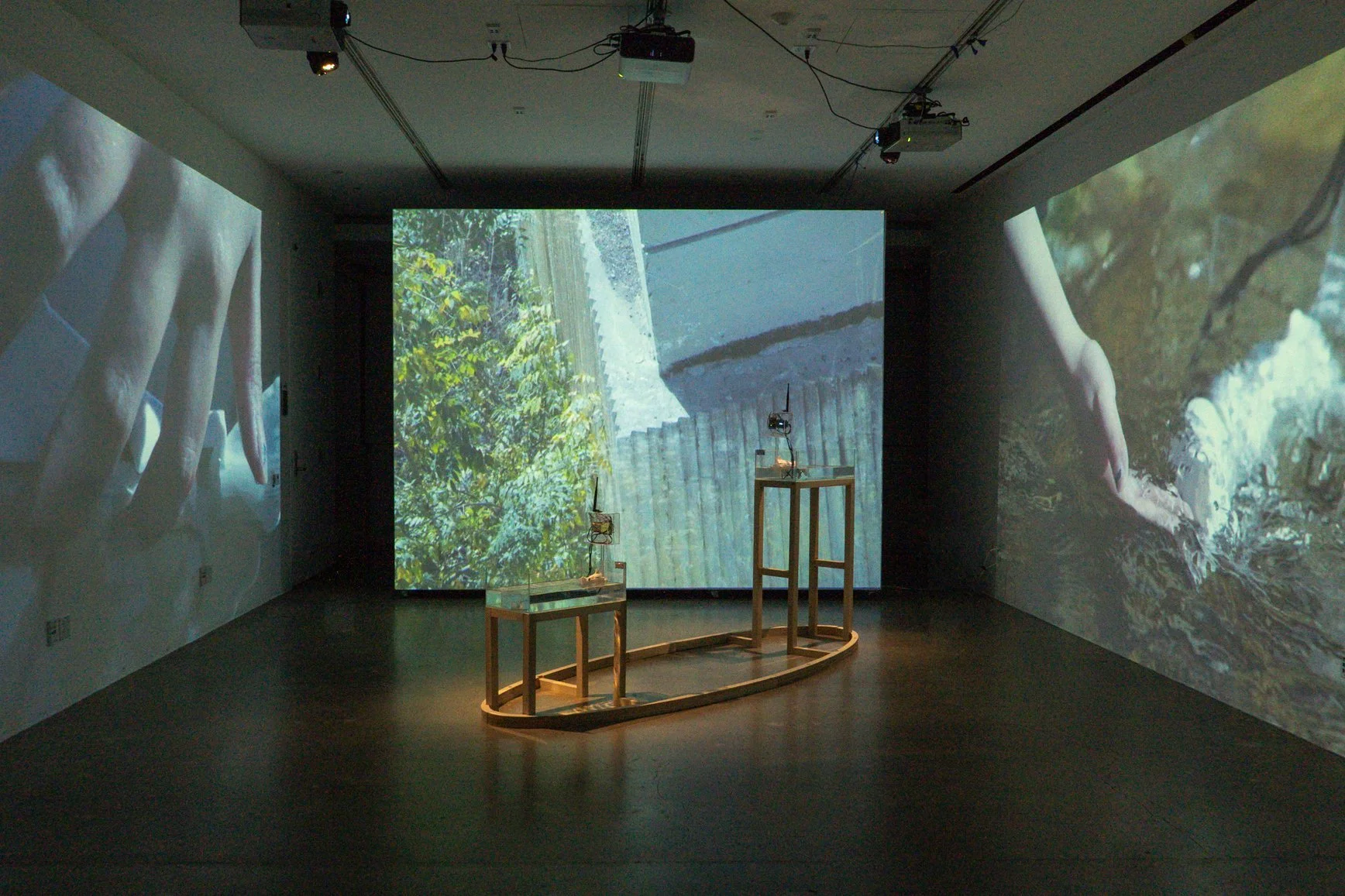
Trout Telephone
Peijing Mou, University of California, Los Angeles
Trout Telephone is a telematic art installation presenting a communication system for trout across habitats fragmented by dam constructions in Los Angeles’ Arroyo Seco watershed.
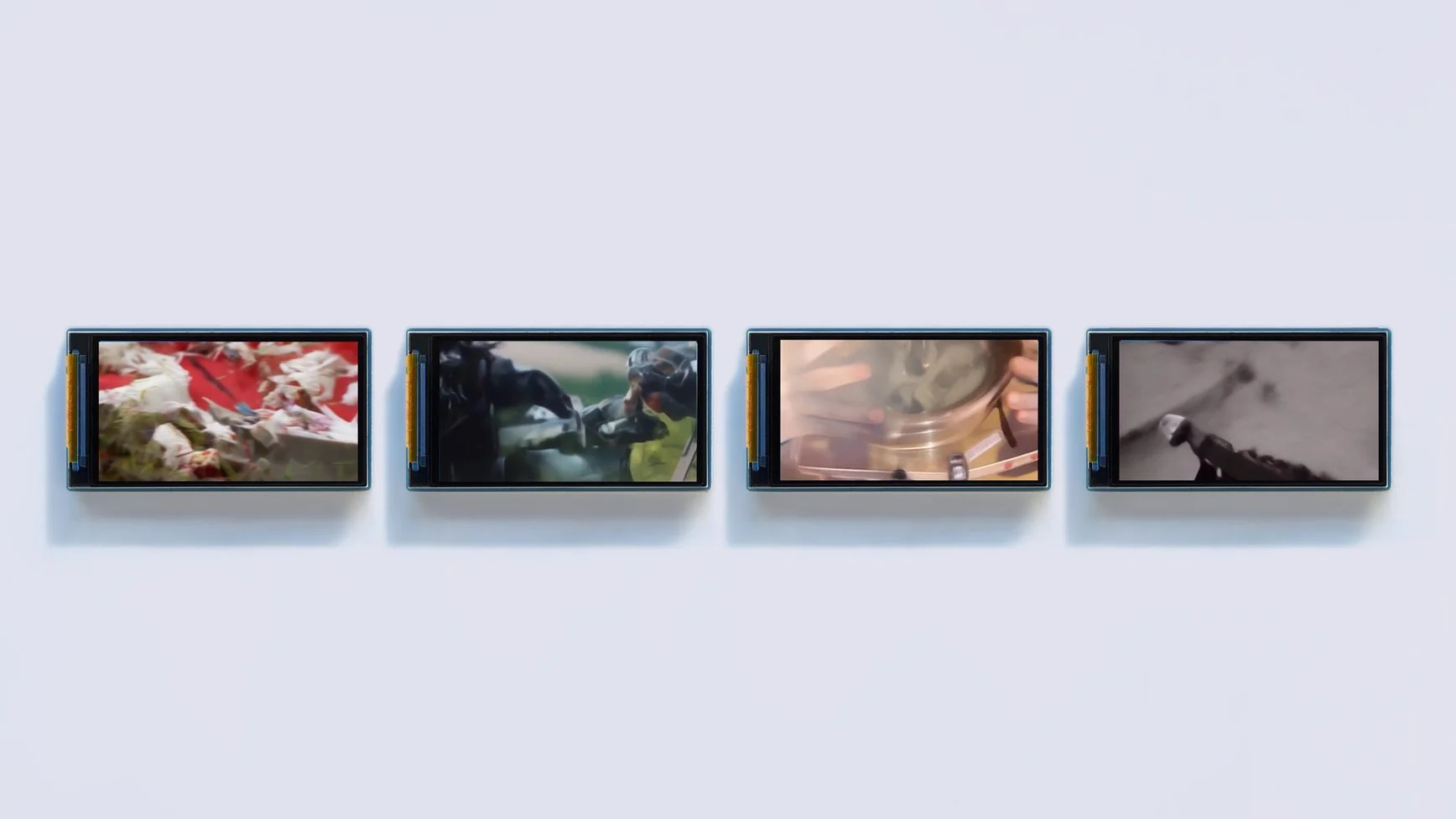
World Simulator
Adam Cole, University of the Arts London
What kind of world simulation can exist without sex? New AI systems promise any world imaginable. World Simulator feeds queer erotica into one such system: the resulting failures expose the absurdity of that promise, and the need for more expansive representations of sensuality.
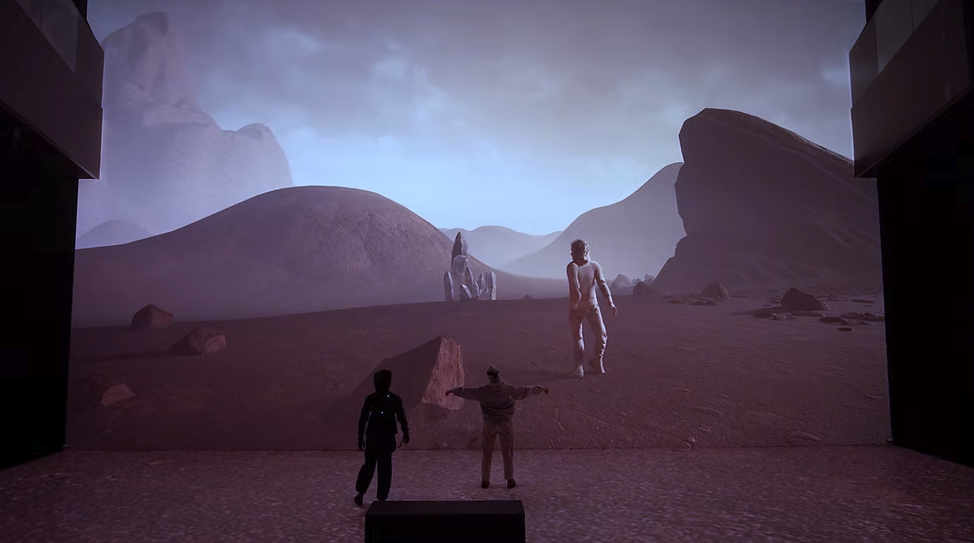
Чули ? Чули / Chuly Chuly
Letta Shtohryn, University of Malta enrolled in PhD in Digital Arts MAKS faculty
Чули? Чули / Chuly? Chuly is a live video game and motion capture dance performance in two acts. Player 1 and dancer move through misleading AI-generated voices, errors and MoCap glitches. As they swap roles, the line between human, avatar, NPC, performer and player blurs.
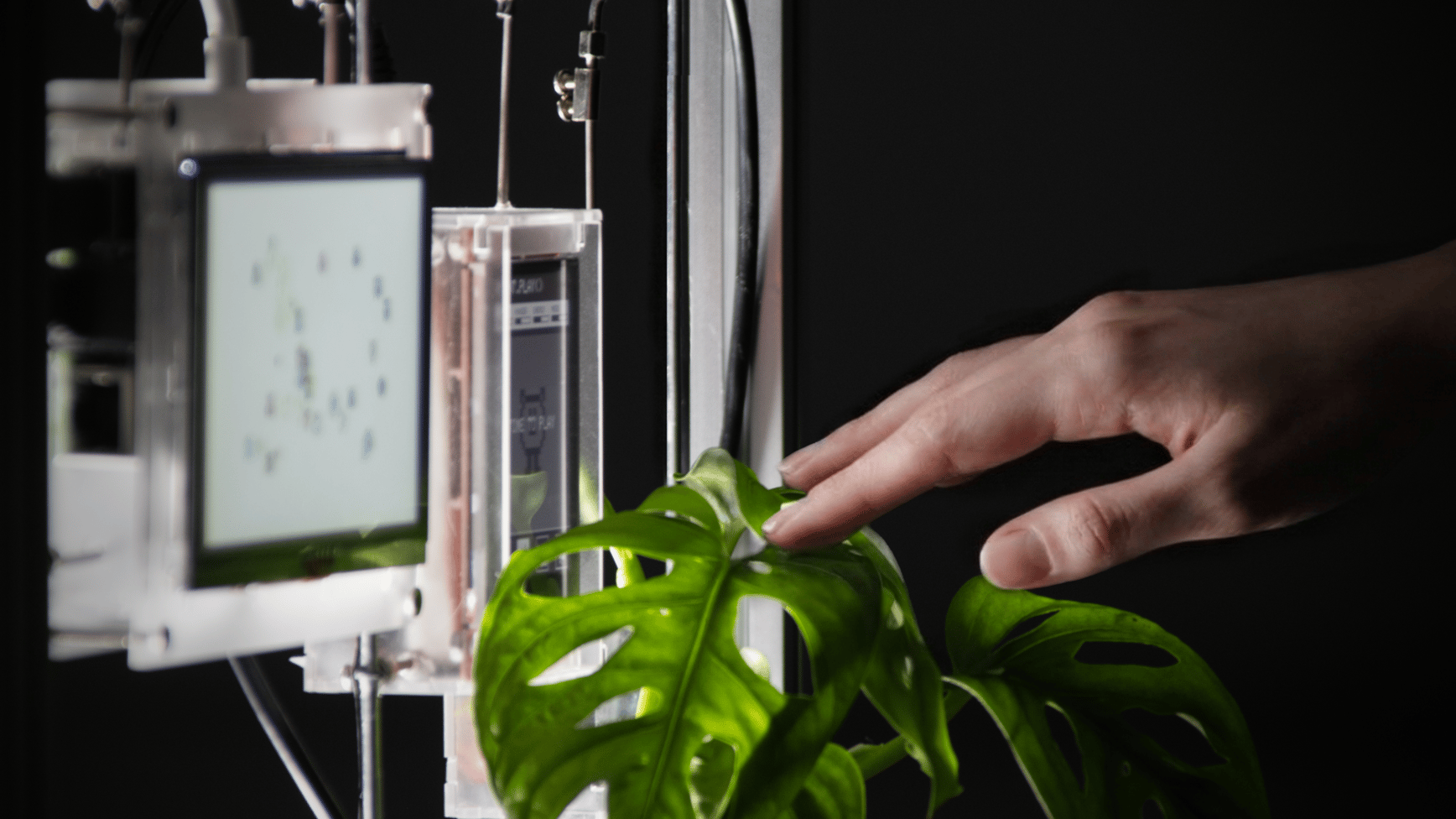
Plant.play(mode='worlding')
Yoonji Lee, Korea Advanced Institute of Science & Technology (KAIST)
Plant.play(mode='worlding') begins as a pet simulation game where living plants nurture virtual beings—their bioelectrical signals and environmental data translated into genetic code. These plant-grown pets grow a web village of their own, an act of worlding beyond human control.
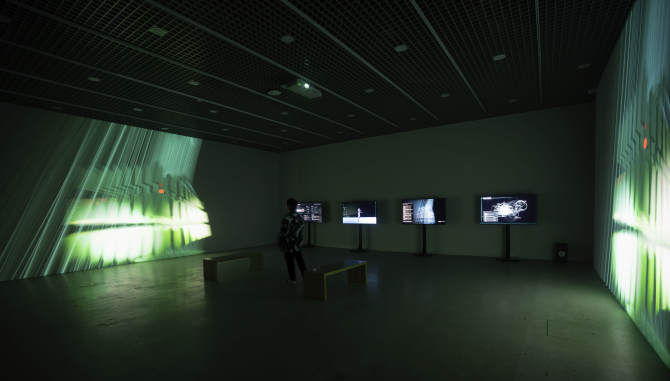
SoTA
KAIST XD Lab (Experience Design Lab), KAIST (Korea Advanced Institute of Science & Technology)
SoTA is an interactive multi-device web artwork exploring AI's trajectory towards vast self-referential computation, mirroring modern art’s shift to abstraction. It overarches AI Research, Interaction Design, HCI, and Software Engineering to produce a provocative immersiveness.
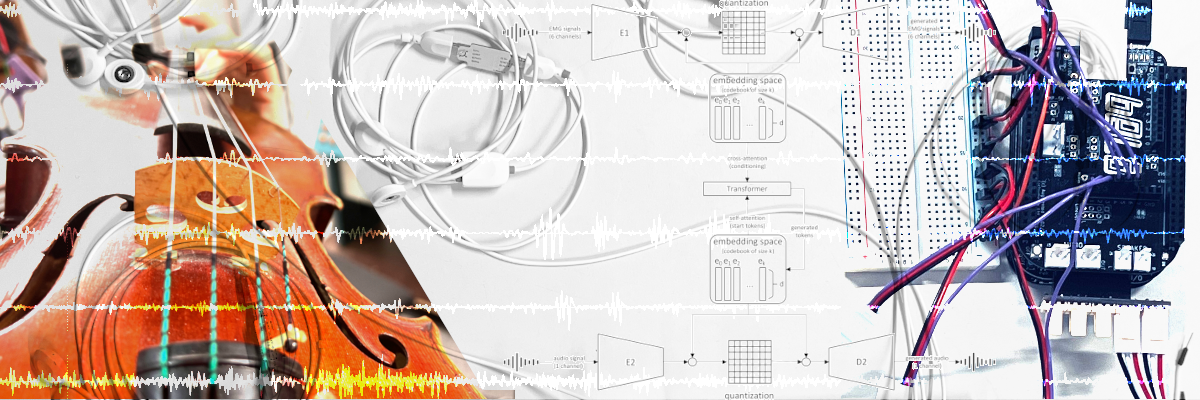
VLA + MLMLMLM
Lucy Strauss, Goldsmiths, University of London
VLA + MLMLMLM is a performance piece featuring viola and a bespoke deep generative model that predicts sound from bioelectric muscle signals. This work superimposes embodied archive with the statistically probable, towards emergent aesthetics of machine listening.
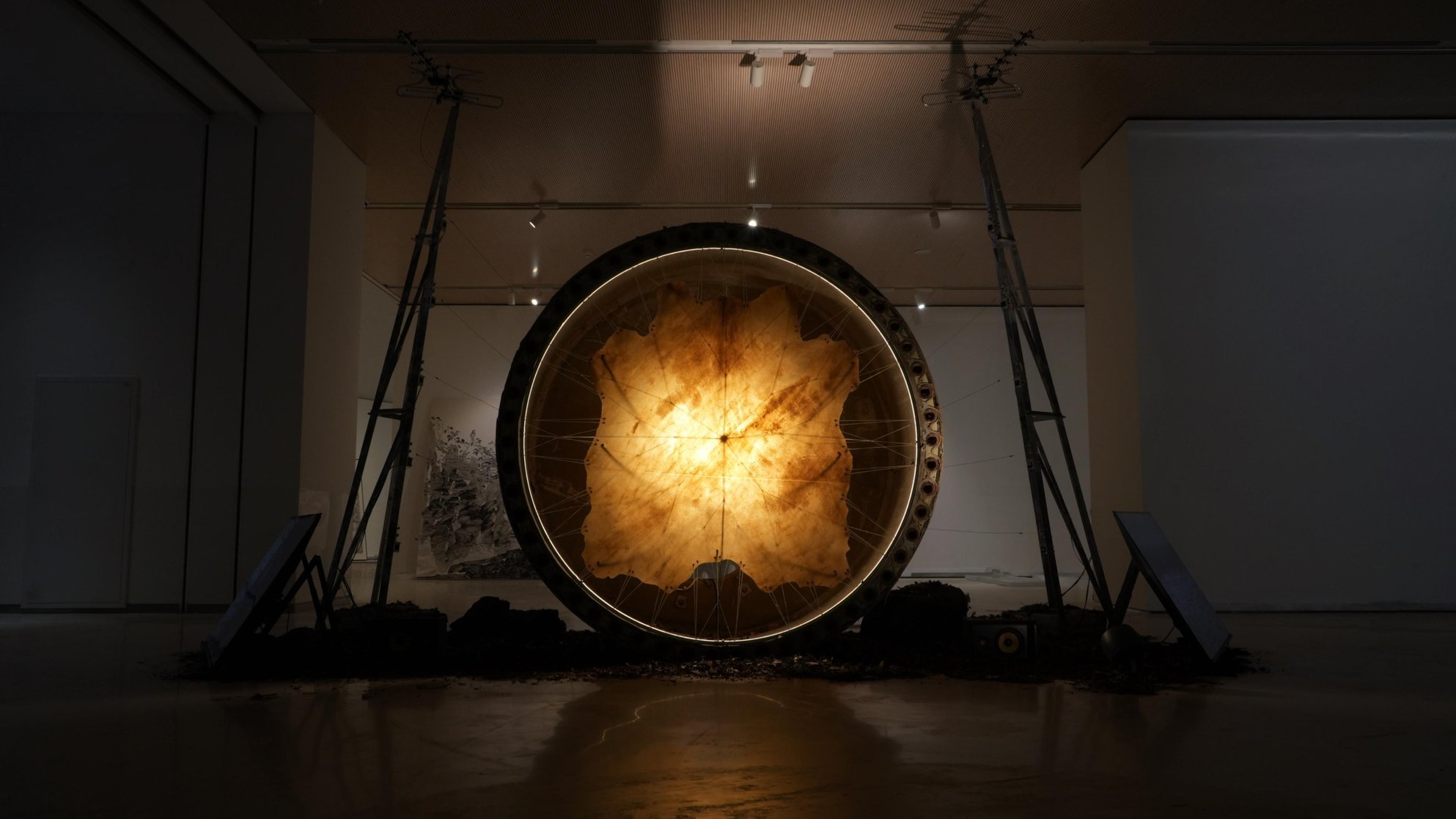
风喉 Throat of the Wind
Aiwen Ding and Zhi Geng, Central Academy of Fine Arts
'Throat of the Wind' is a site-specific sound installation based on long-term field research. It converges the energies of history, wind, and electromagnetism into a discarded turbine blade, transforming it into an earth instrument—a 'throat' for the land's memory.