Parallaxe
Chantal Pisarzowski - forward stud.io
Artwork Description:
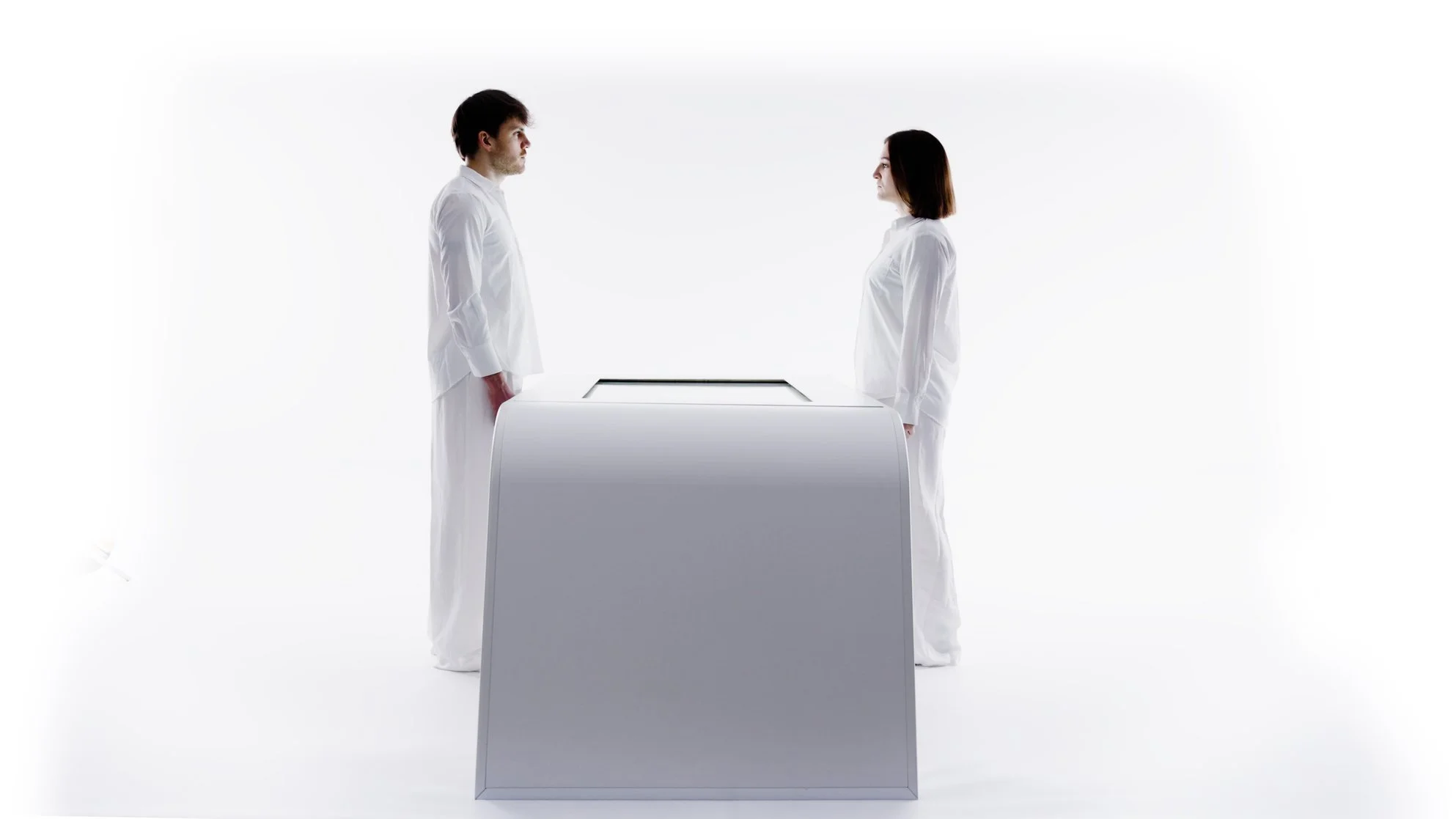
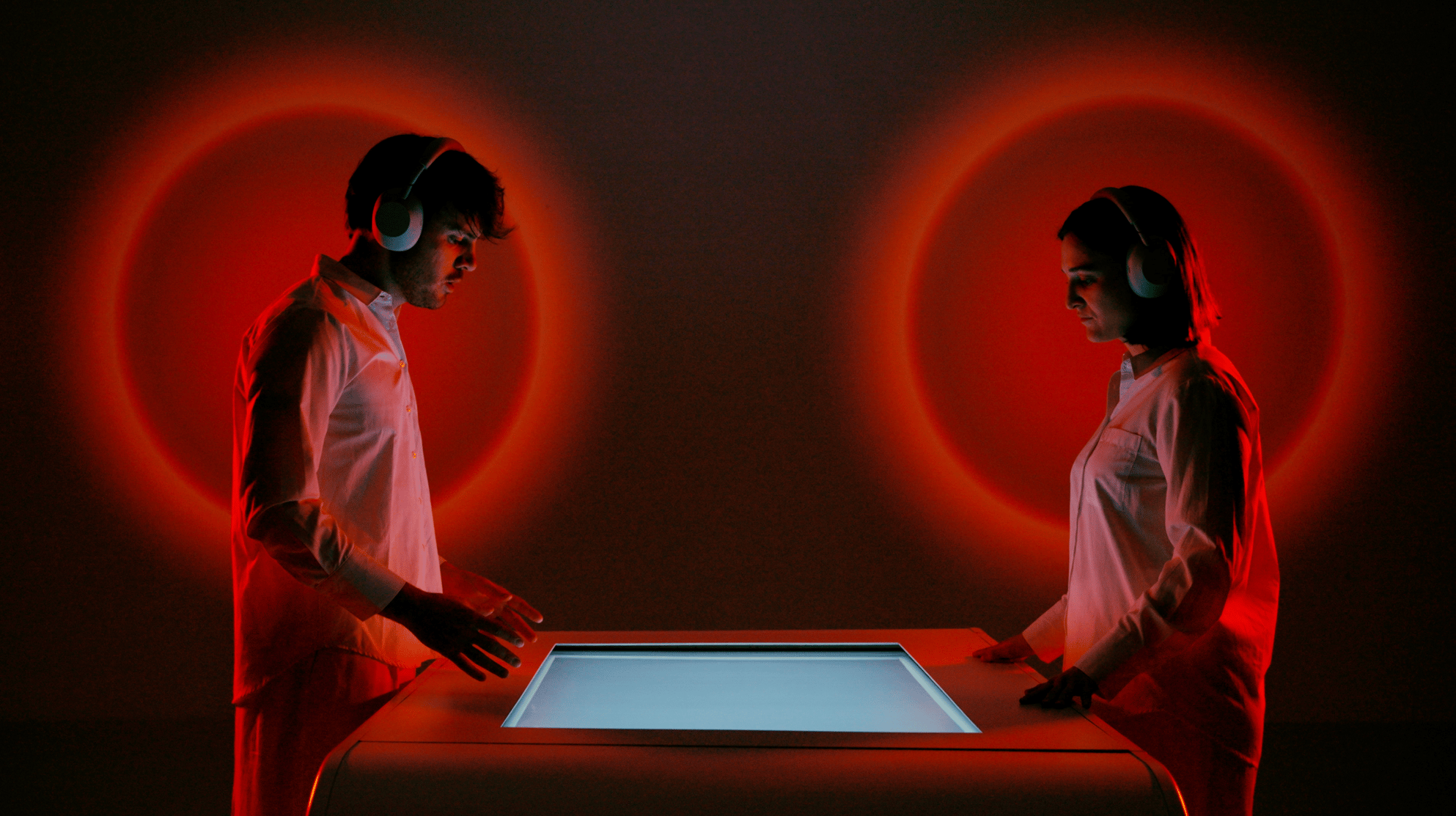
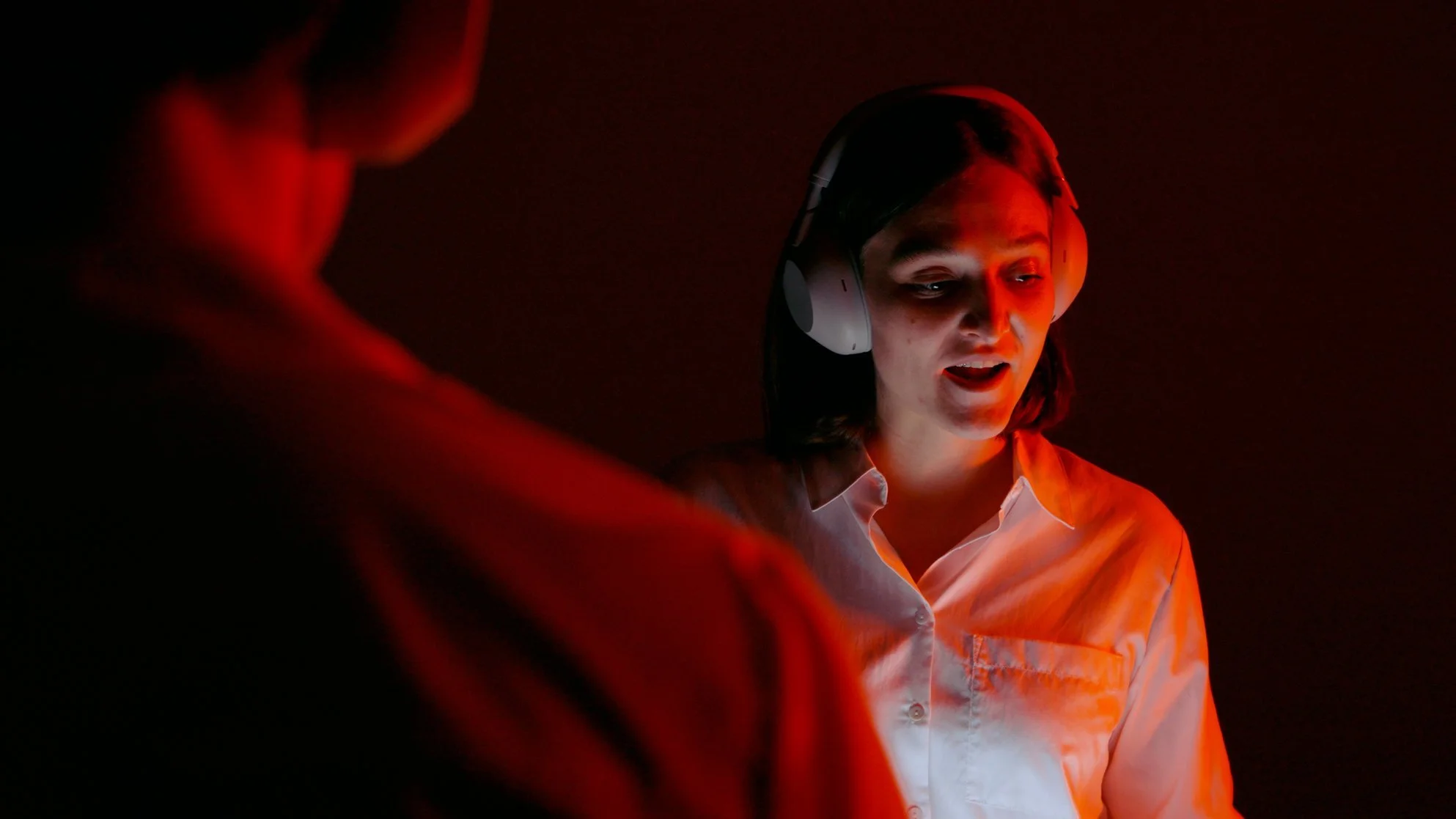
Can artificial intelligence make political conversations possible again? Political conversations are happening less and less — and when they do, they escalate. The tone makes it hard to stay focused on the issue. Many people avoid such encounters. And yet we may not be as far apart as it seems. We have simply forgotten how to talk to one another. Parallaxe brings people with opposing political positions to the same table. Eight value-based questions — on climate policy, asylum law, military responsibility, or how to deal with authoritarian regimes — form the basis for an algorithmic matching that deliberately seeks the greatest political distance. Participants sit across from one another, wear headphones, and hear each other exclusively through AI. The system translates in real time, reformulates emotionally charged statements into calmer language, asks follow-up questions when arguments remain vague, and checks verifiable claims against independent sources. Where evidence is insufficient, the system withholds judgment. What emerges is not a conversation in the usual sense, but a designed experiential space in which the conditions of communication become visible. Sitting face to face while hearing each other only through AI makes it tangible how strongly understanding depends on structure, language, and timing. Once immediate escalation is interrupted, the person behind the opinion begins to emerge with their values, contradictions, and ambivalences. Parallaxe uses the same algorithmic logics that produce echo chambers and reverses their direction. The work raises an uncomfortable question: whoever shapes a conversation also shapes what becomes possible within it.
Project Collaborators:
Parallaxe originated as a student project in Prof. Andreas Ingerl’s course “TRULY NEW BAUHAUS” at HTW Berlin. Chantal Pisarzowski developed the concept, system design, and technical implementation. While still studying, she founded forward stud.io — a studio for interactive AI installations — and was invited to Fraunhofer HHI as Artist in Residence. Within this collaboration, the system was independently evaluated from a scientific perspective at Fraunhofer HHI’s Capture & Display Systems group under the direction of Thomas Koch. The collaboration culminated in a joint exhibition at Berlin Science Week 2025 and concluded in February 2026.