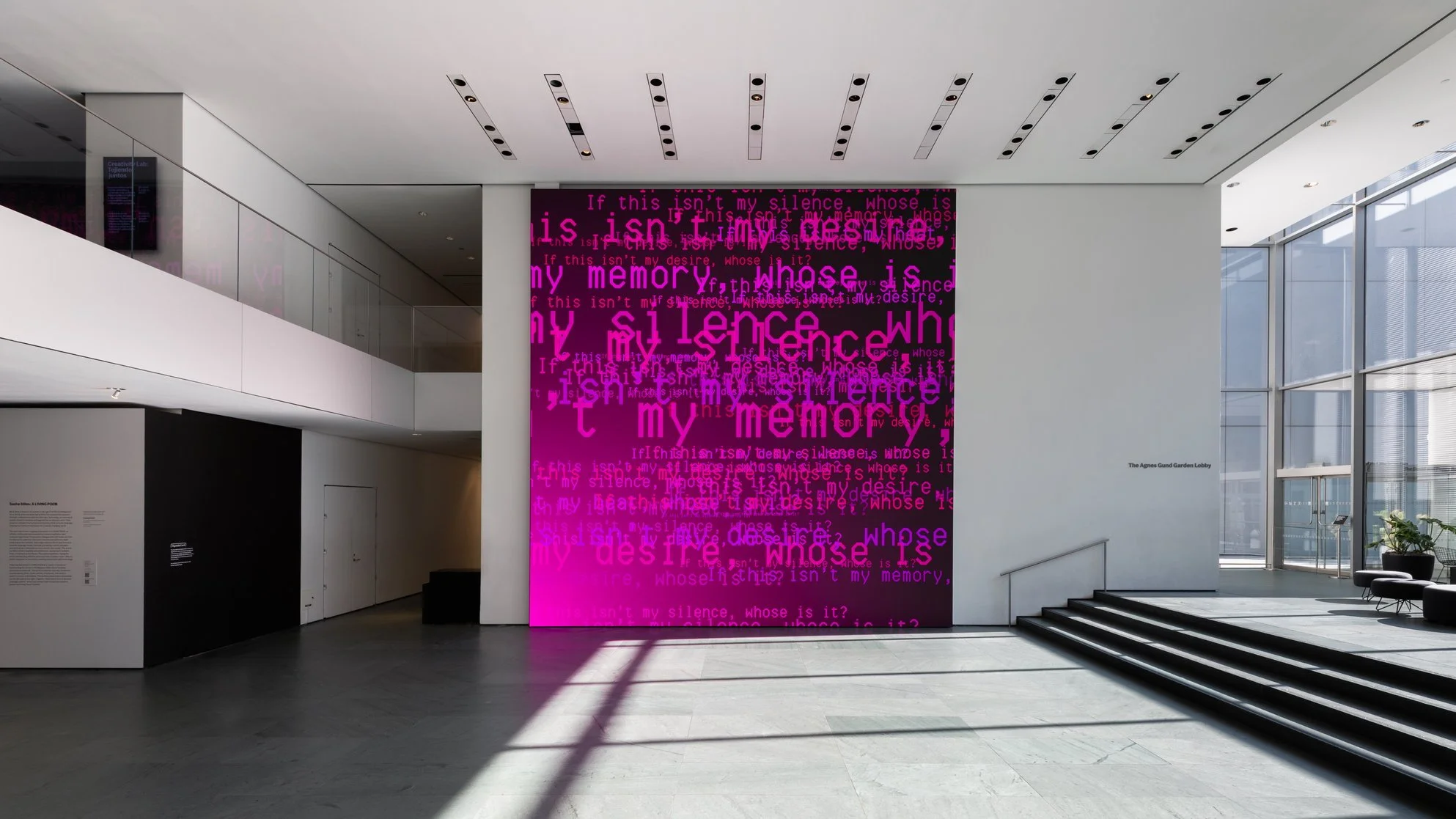
A LIVING POEM
Sasha Stiles
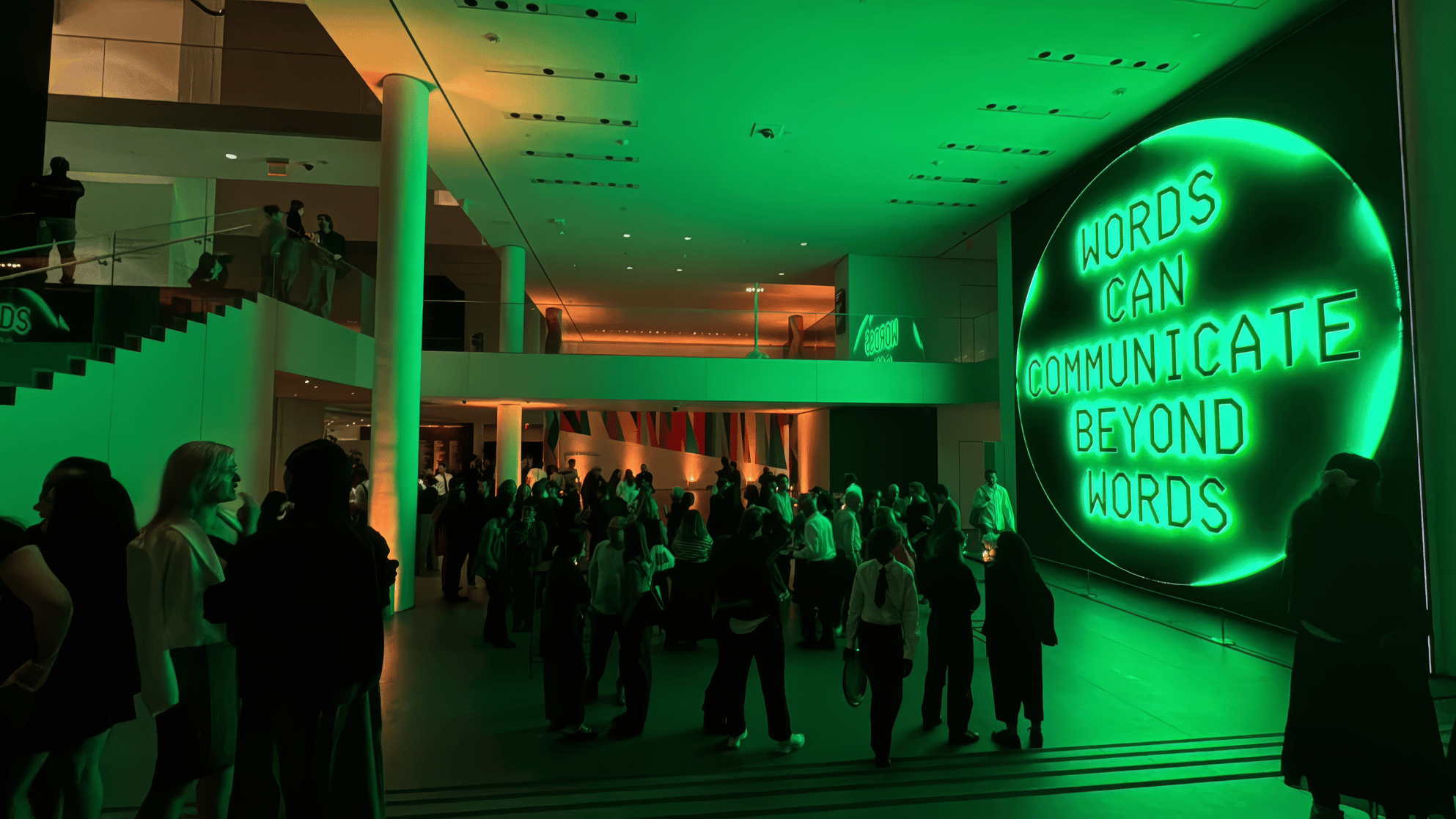
Artwork Description:
A LIVING POEM is an artist-built generative environment that advances language as a defining medium of the 21st century -- a moment in which language itself is evolving beyond orality and literacy into a dynamic, multimodal interface for expression and meaning-making. The work fuses human and machine imagination to invoke a communal space for urgent discourse around the technological and cultural shifts redefining what it means to be alive in a time of nonhuman intelligences, dehumanizing forces, and transformative possibilities. Informed directly and indirectly by the legacies of text-based art, literature, conceptualism, and computation, the project considers language not simply as a carrier of information, but as a living technology of consciousness, relation, and creative emergence. A LIVING POEM integrates verse, voice, and visuals through code sketches, custom prompt architectures, and bespoke datasets to perform an infinite poem continuously generated and regenerated in real time. Scalable across large-scale installations, interactive interfaces, multichannel environments, and audio experiences, the work has already been deployed across a range of contexts, from The Museum of Modern Art to ZKM | Center for Art and Media, never unfolding quite the same way twice. At its core, the project functions as a living “poem in residence” that embodies Stiles’ proposition of poetic intelligence — the intertwining of emotion and algorithm in order to make meaning — as a model for alternative understandings of technology that seek to restore human capacities such as attention, presence, stillness, slowness, and nuance that are increasingly eroded by dominant technological systems.
Project Collaborators:
Created and performed in collaboration with Technelegy, my longtime AI-powered alter ego. Original music and sound design in collaboration with Kris Bones. Originally developed for the Hyundai Card Digital Wall at The Museum of Modern Art, New York, in 2025, in collaboration with curators Martha Joseph and Juyeon Song, with research assistance from Lydia Mullin.