Sea Oasis - Survival Architecture
Dotdotdot
Artwork Description:
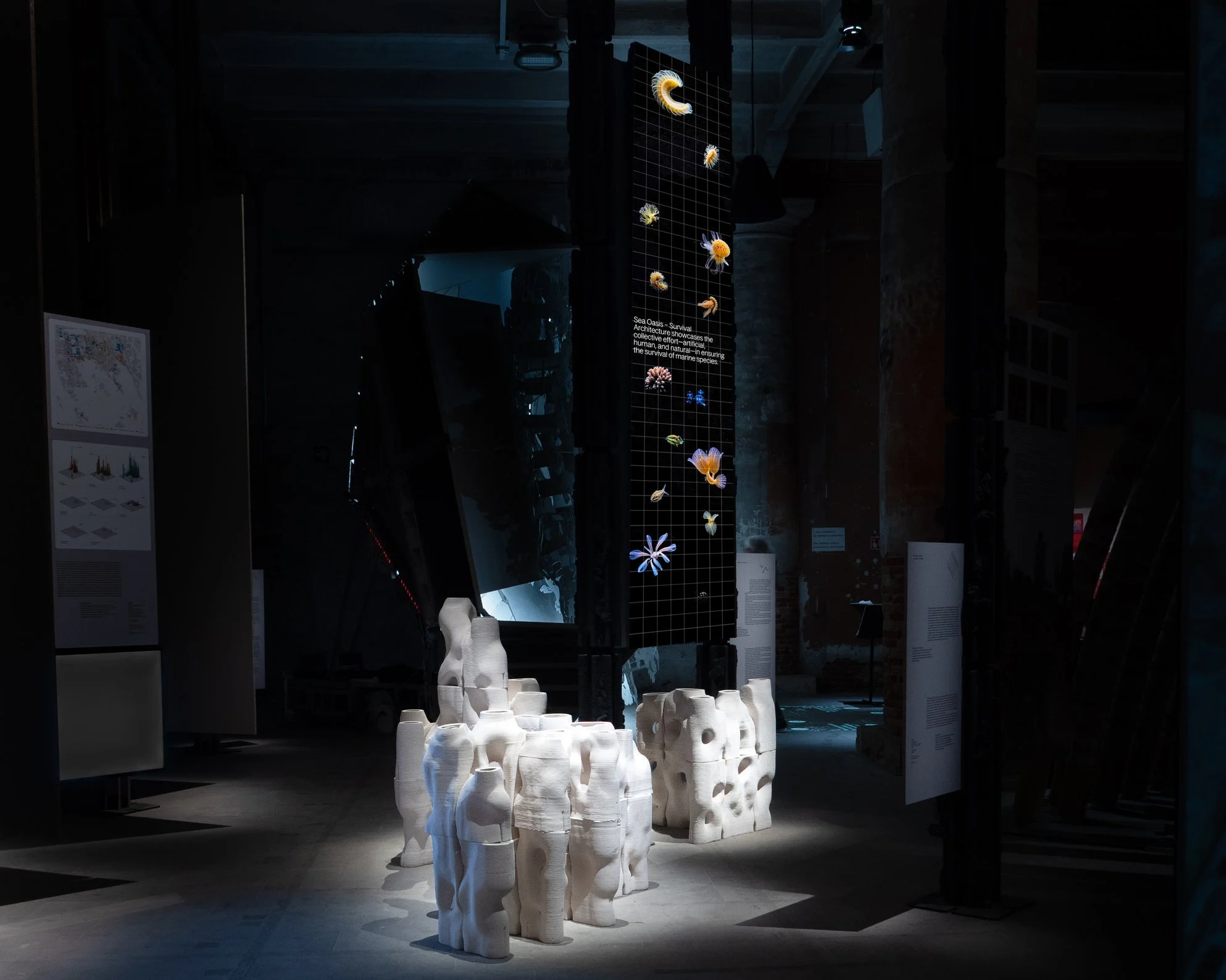
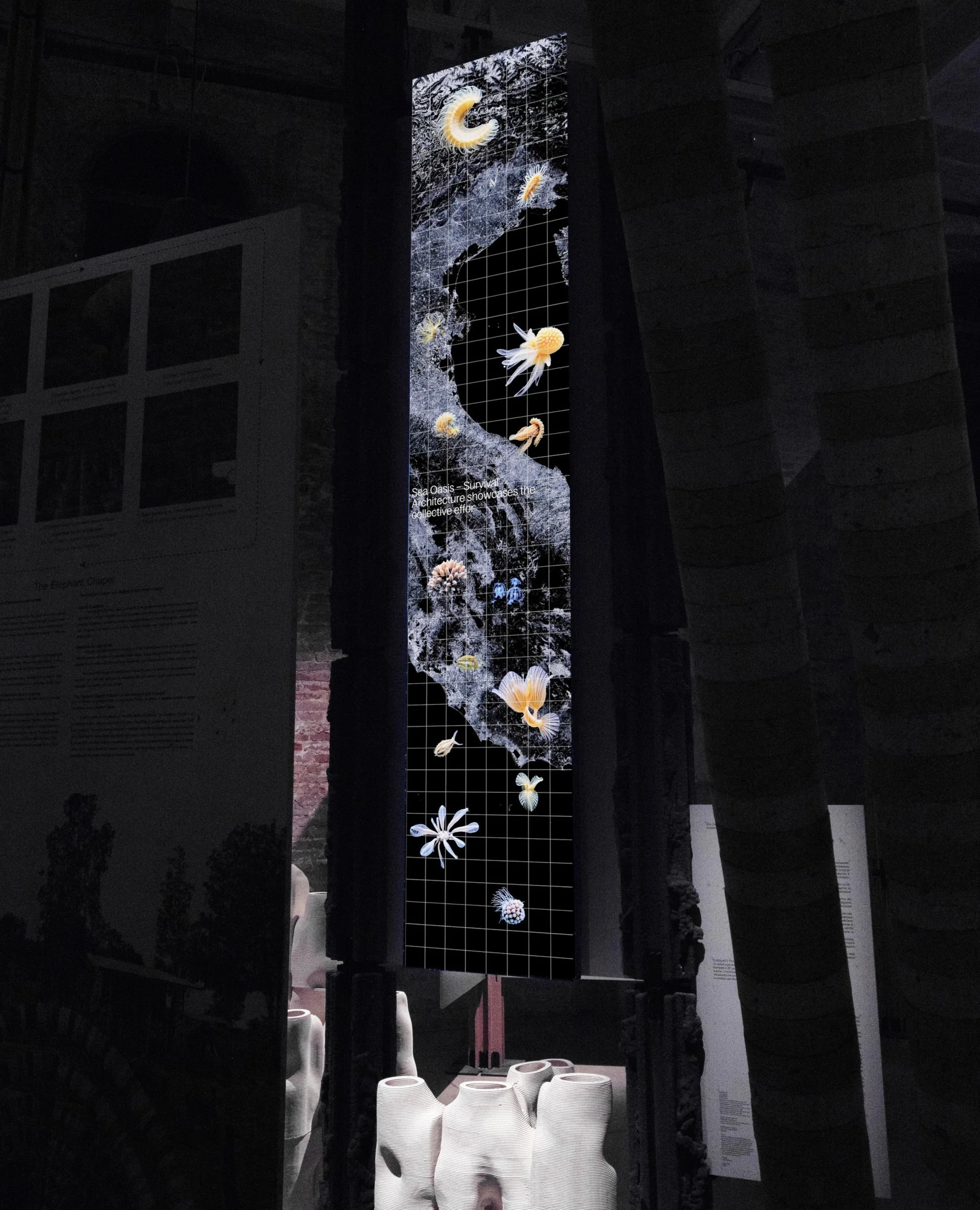
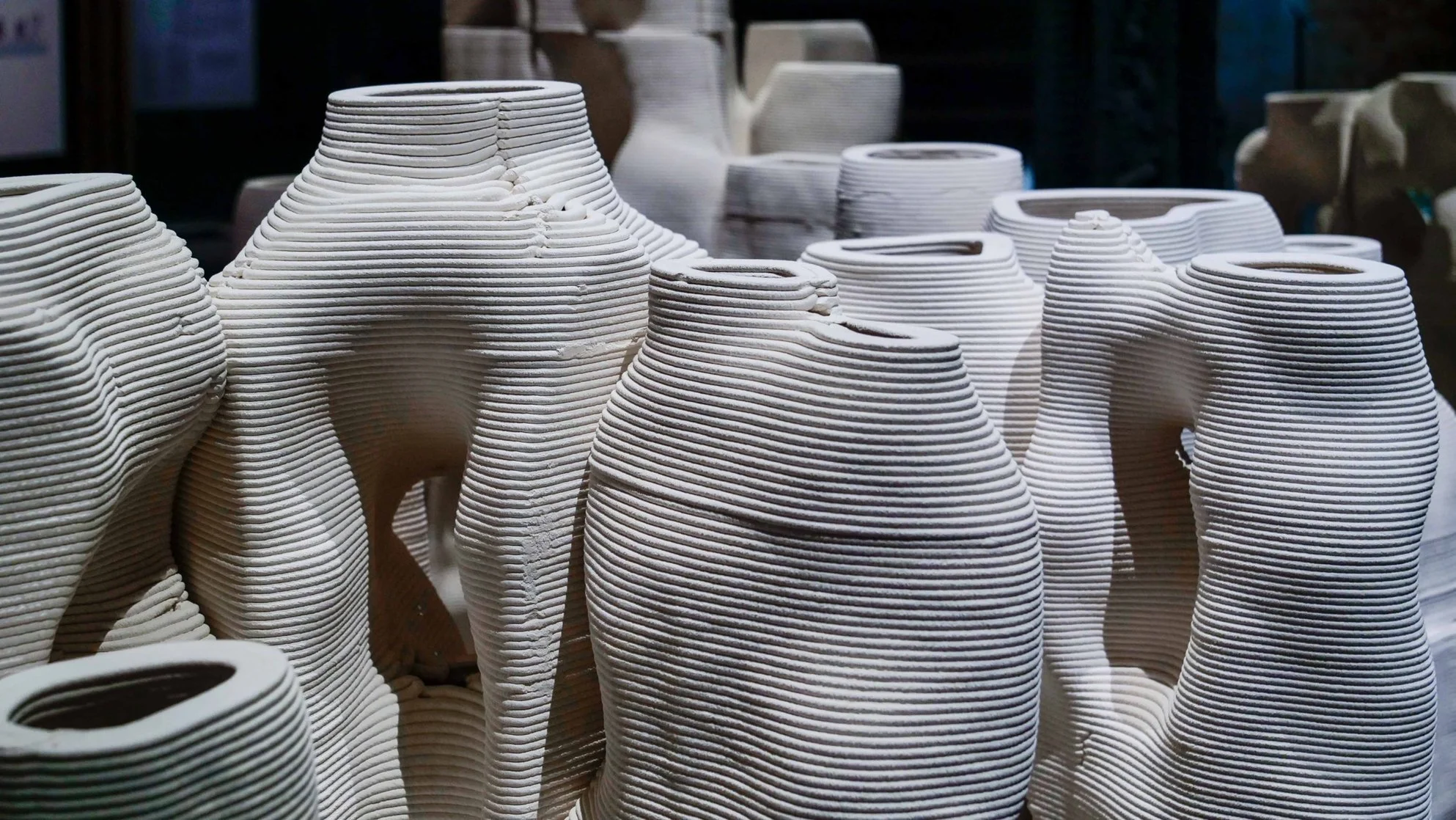
Sea Oasis – Survival Architecture began as a research collaboration. Working alongside researchers at the University of Padua studying marine restoration operations in the Venice Lagoon, Dotdotdot asked a core question: how can digital technologies support the active regeneration of marine biodiversity? The answer took the form of an installation at the 2025 Venice Architecture Biennale, curated by Carlo Ratti. Visitors entered a space conceived to evoke submersion — surrounded by intricate 3D-printed reef structures and enveloped in a soundscape merging underwater biophonies with digital harmonies. The reef elements were designed algorithmically from organic forms inspired by biological 'ecosystem engineers' — organisms like oysters that naturally construct underwater architectures to support and aggregate life. They were created to be later immersed in the Adriatic Sea and serve as artificial coral reefs supporting marine biodiversity restoration. Alongside the reefs, a dynamic video interface visualised in real time the AI's decision-making logic — processing environmental parameters (temperature, pH, salinity), biological dynamics (predation, reproduction, competition) and anthropogenic pressures (fishing, chemical, noise and light pollution) — to determine the precise coordinates where the reefs should be submerged for maximum restoration impact. The installation's governing logic was Regenerative Design: the structures exhibited at the Biennale were not temporary objects to be discarded, but future marine infrastructure. Following the exhibition, the reefs were submerged in the North Adriatic at the coordinates identified by the AI. Their impact on marine biodiversity is now being monitored by the University of Padua as part of two ongoing doctoral theses.
Project Collaborators:
For Biennale Architecture 2025