Granted
Romy Gad el Rab + Caroline Sinders
Artwork Description:
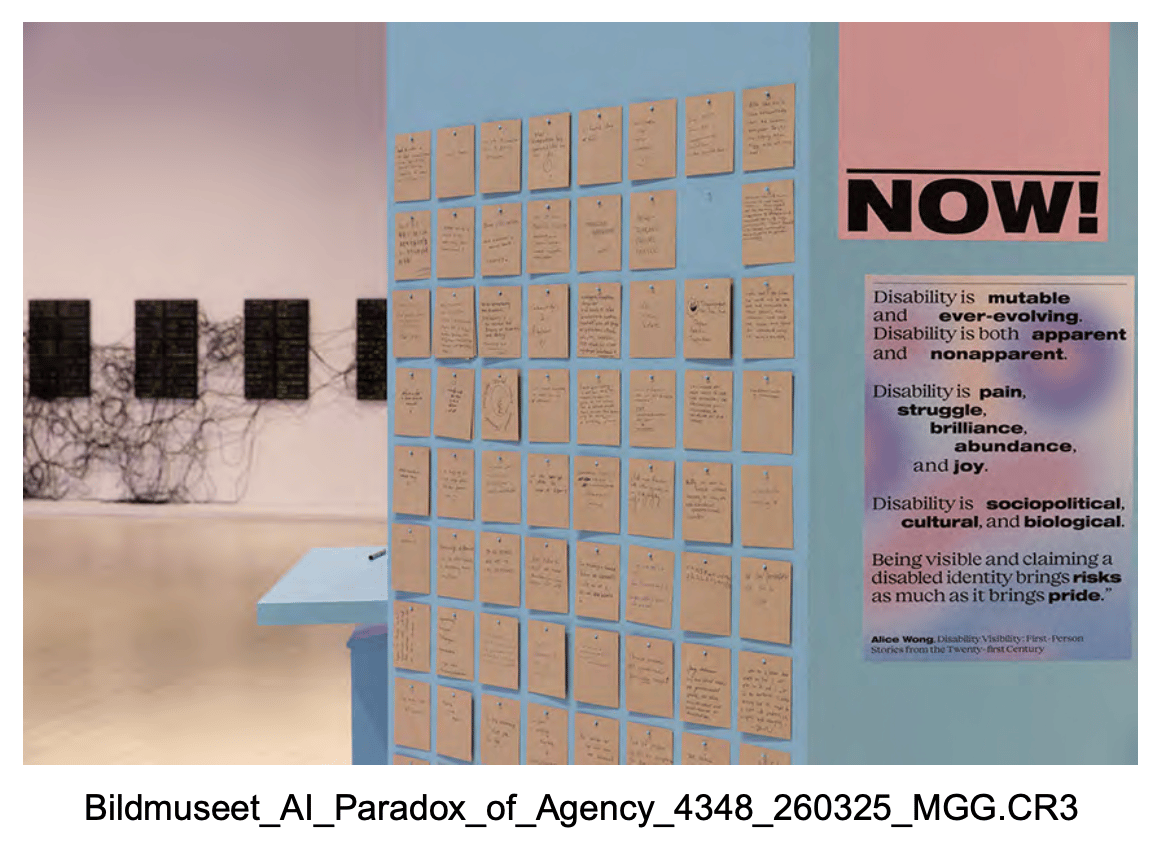
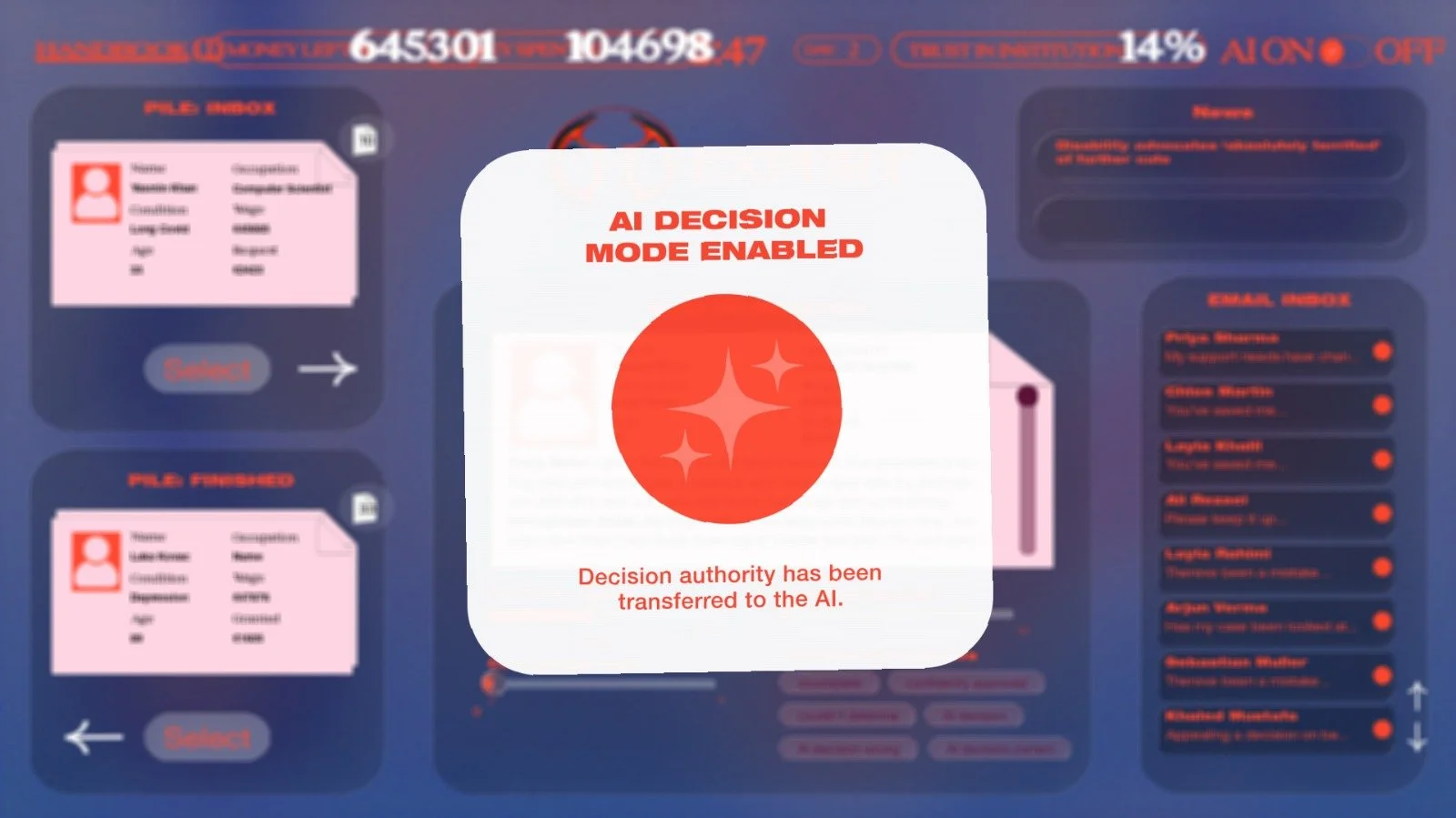
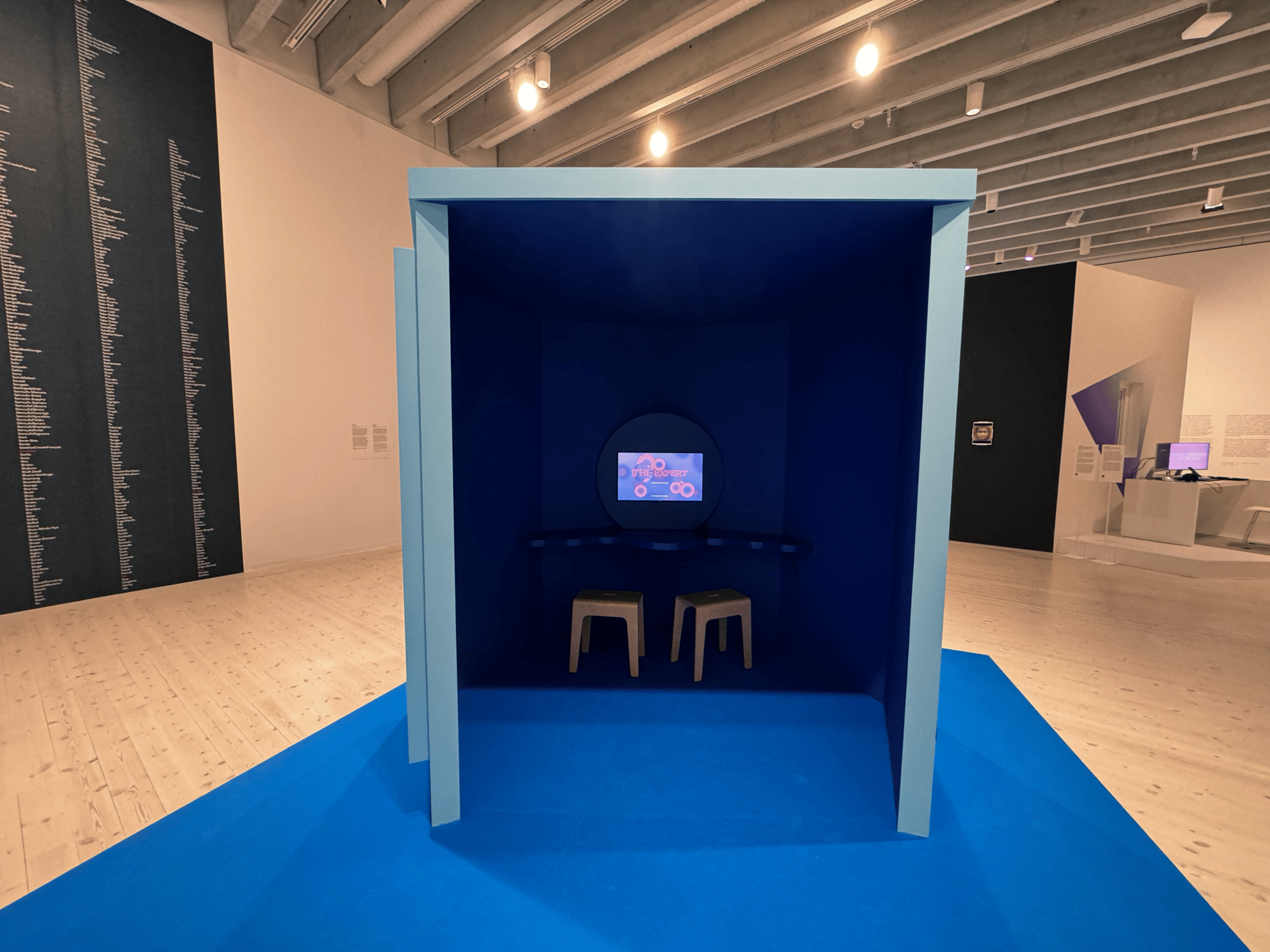
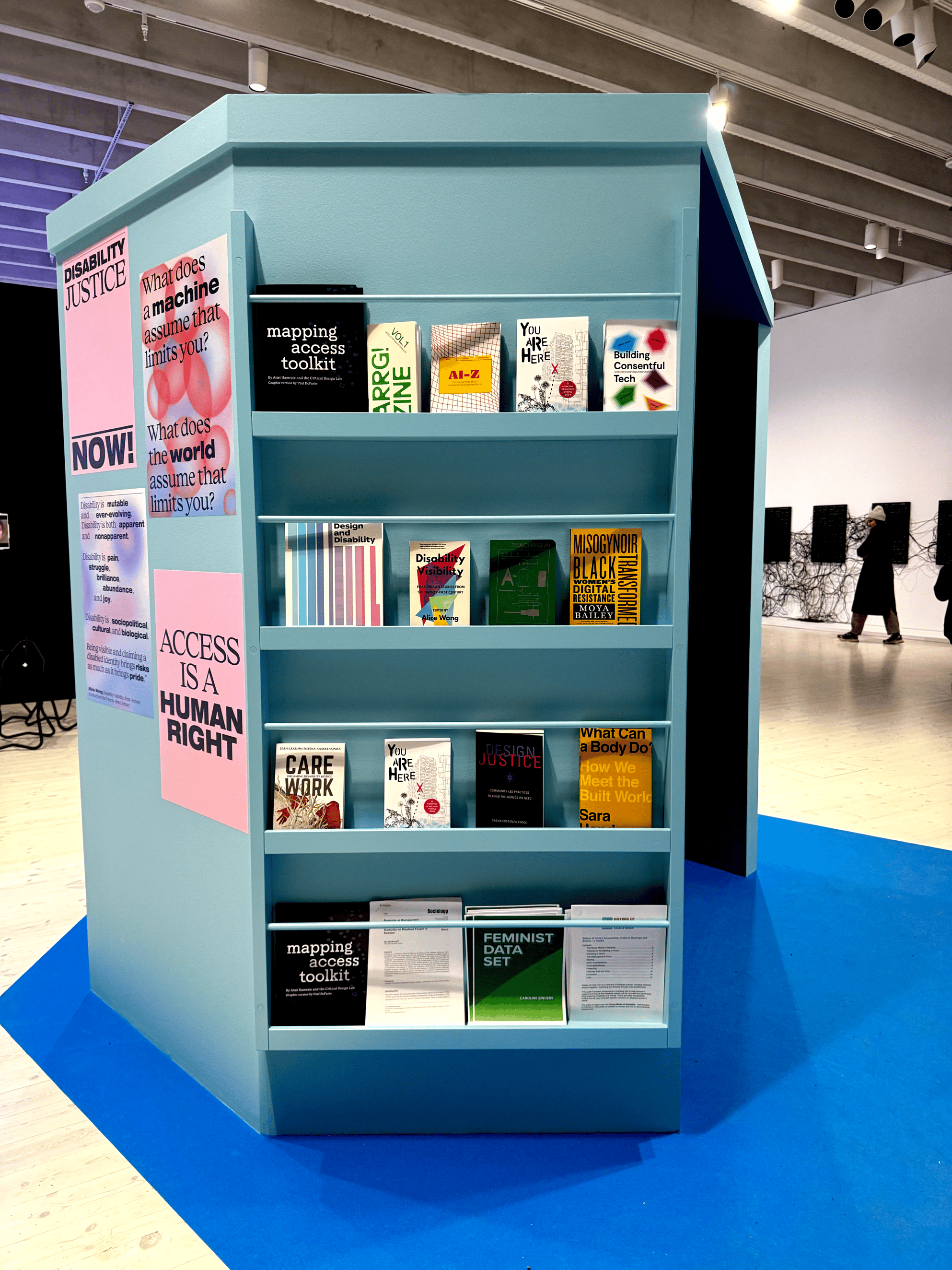
What happens when care becomes a calculation? Which lives remain unreadable to systems that demand categorisation? What happens when decisions are shaped by automated systems rather than human understanding? This interactive installation, commissioned the Bildmuseet museum, by uses gameplay to turn visitors into civil servants of the future, working with and against the smart computer to help distribute resources and support for disabled individuals and communities. Workplace technologies are often designed to individuate and piecemeal work – programming us into worker-bots to run their systems – but can humans work together to overturn the decisions made by the machine? This project features a kiosk with a game, analog dataset that users can contribute to create more inclusive futures, a library on disability justice and posters, all designed to allow visitors to explore the human impact of large-scale technology systems, focusing on questions of care and human agency. As players play, they retrain the algorithm within the game- either towards justice, or not, depending upon the choices they make. The artists consider how disabled life is continually negotiated within systems that fail to accommodate its shifting realities. Surfacing the frictions that are inherent to navigating institutional and technical regimes, the work examines how administrative and automated systems determine what forms of need become intelligible, and which are dismissed as error. The installation renders these procedural and temporal constraints tangible, positioning visitors within the conditions under which recognition is produced and asking what forms of care become possible when those limits are brought to the surface.
Project Collaborators:
Caroline Sinders and Romy Gad el Rab are artists and researchers who have been collaborators since 2019. Together, they bring their backgrounds in human rights technology, clinical research in technology addiction, and design practice to create artistic and public interventions exploring the human impacts of large scale technology systems, centering care and human agency. Caroline is an artist and human rights technologist who focuses on intersectional justice, design, policy, and how technology disproportionately harms marginalized groups. Caroline has worked with the United Nations, the Information Commissioner's Office, the European Commission's Science Art Residency, Eyebeam, the Mozilla Foundation, Harvard University, and other groups. Romy is a psychiatrist, researcher, and artist working within the NHS, with a focus on addressing the harmful impacts of technology. She has contributed to public interventions at The Tate Britain, Modern, Somerset House, among others.