Qapariq: From Awasqa Kanchik to Awasqa Kayku
Paola Torres Núñez del Prado
Artwork Description:
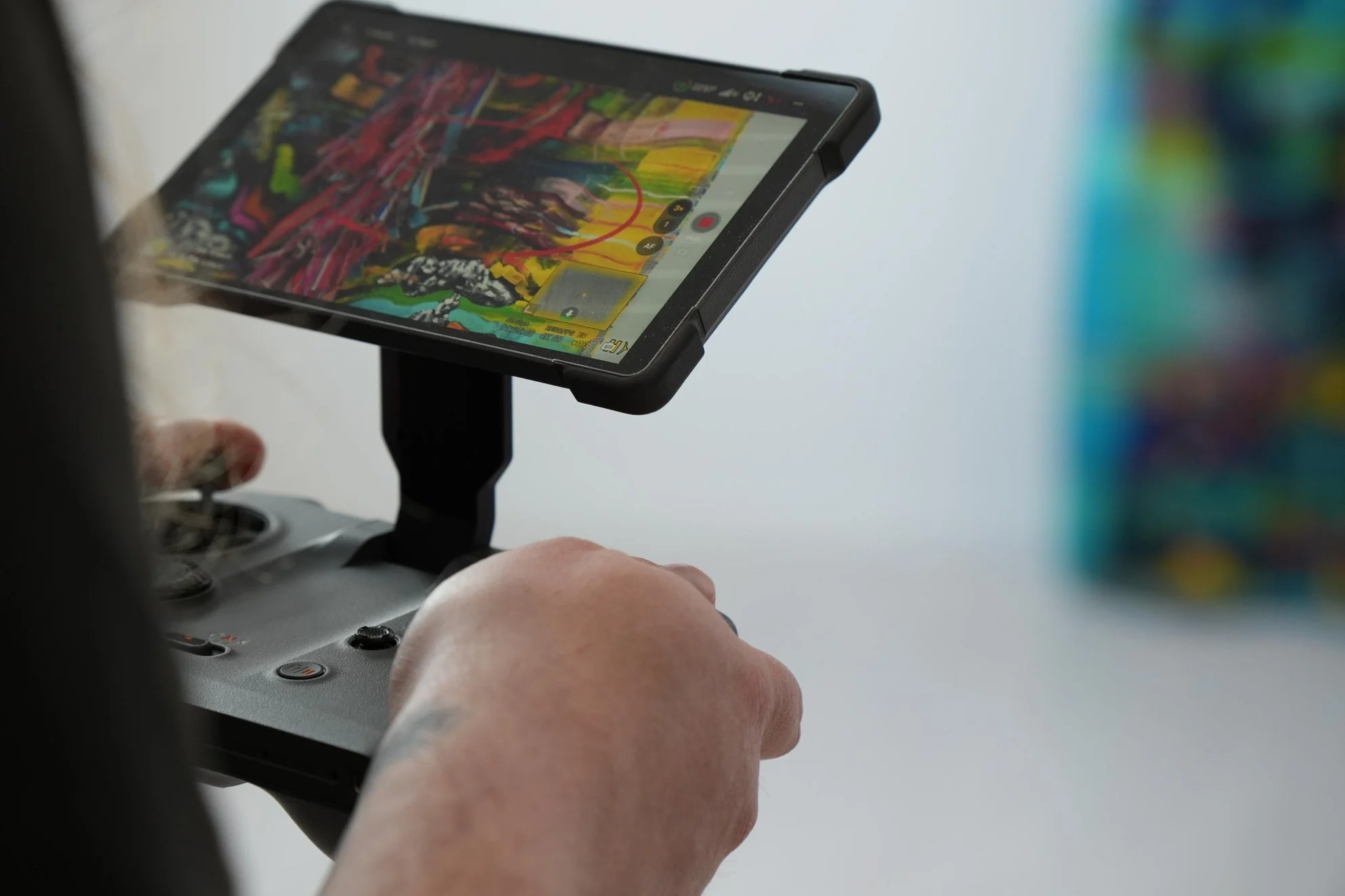
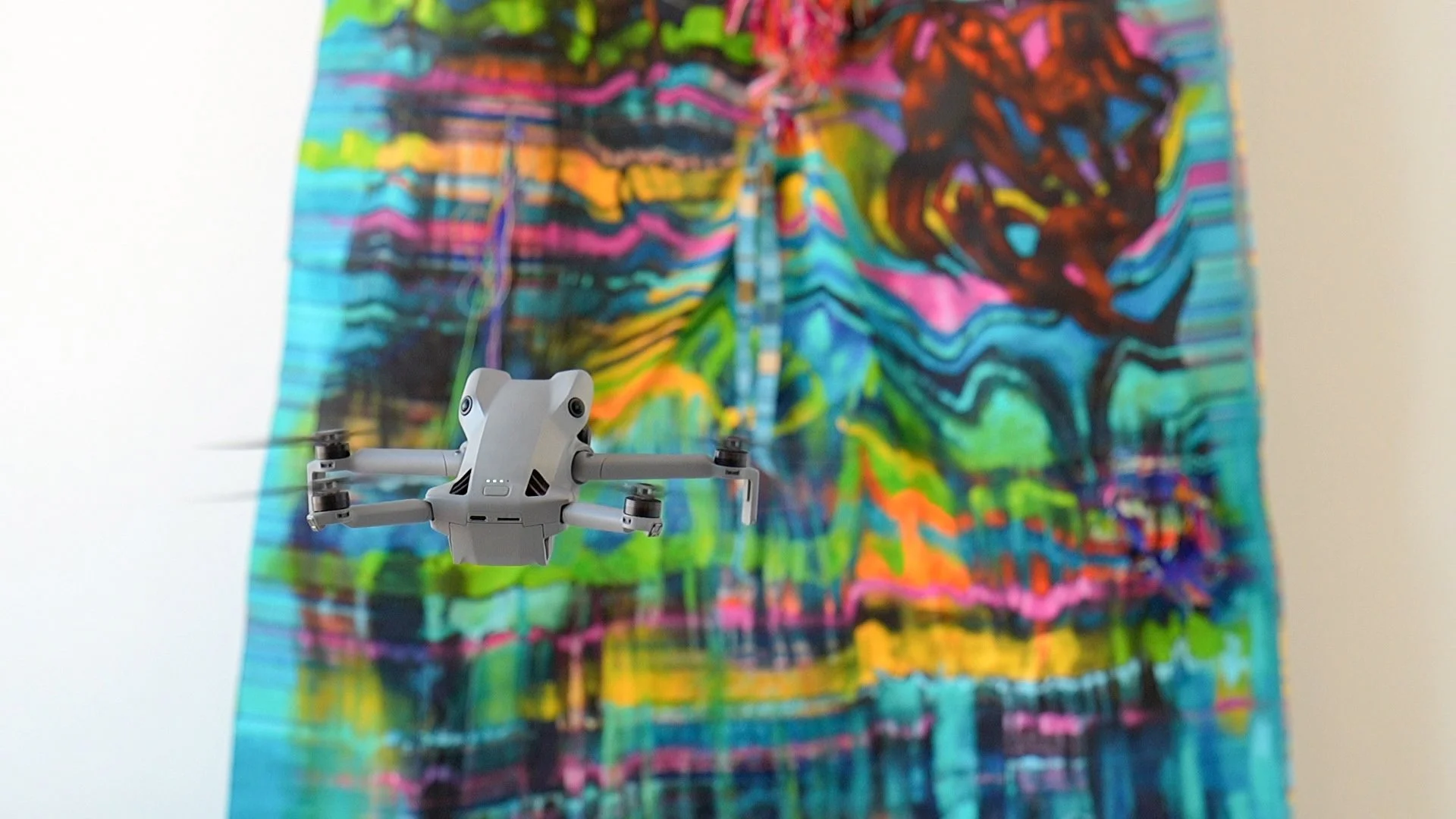
Interacted by controlling a drone, a technology developed primarily for surveillance and warfare, the piece asks not just how machines see us, but also what they are unable to see. As the drone ‘reads’ the textile it maps the targets that it finds into sound, which is in turn generated in real time by the dedicated 'RAVE terrain Latent Space' system developed for this work. 'Qapariq' is a Quechua word that translates to 'Scream(er), Call(er)', and as the system processes the visual data, each identified symbol becomes audible. Simultaneously an artwork, a score, a latent dataset, a landscape and an archive of systematic violence against peoples who were deemed to fall below the threshold of recognition by those with power over our geography, each class found in the painting corresponds to a specific massacre from current times. The detection output passes to the sound system built on RAVE (Realtime Audio Variational autoEncoder, developed at IRCAM) also trained by myself exclusively on my own audio compositions. The sonic foundation of the entire work is the recording of my own voice: a scream, encoded by RAVE into a 32-dimensional latent trajectory. The audience never hears the original recording, just RAVE's reconstruction of it compressed through a neural model that learned from my own sounds. When YOLOv5 identifies a region of the textile, it names it. These names appear as labels on the live drone feed, streamed in real time to the audience. The targets are named.
Project Collaborators:
Jonas Jonsson, programming The artwork has been commissioned by Bildmuseet It is sponsored by the Jacob Wallenberg foundation Clips from video: Bildmuseet and Sveriges Television