Trout Telephone
Peijing Mou
Artwork Description:
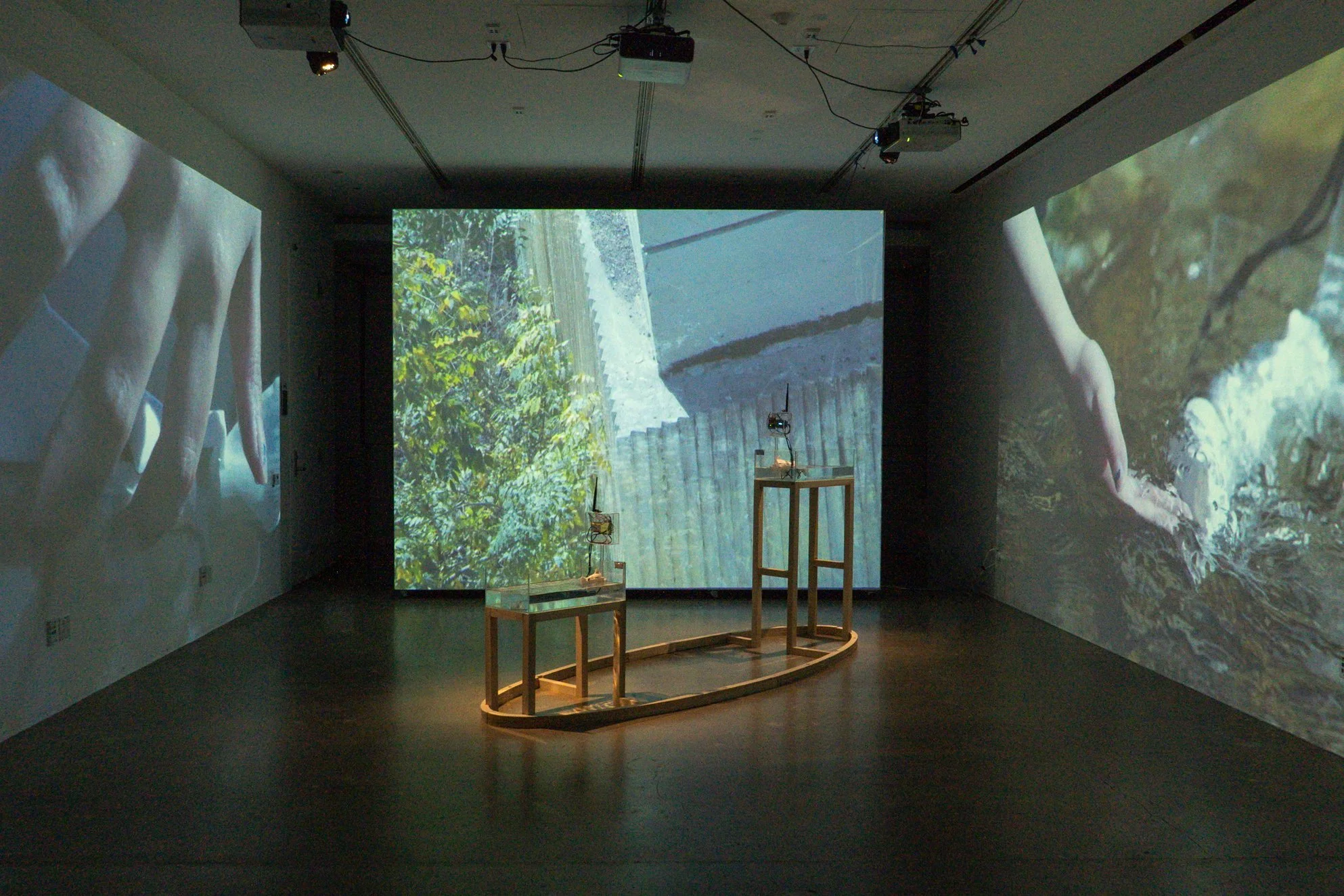
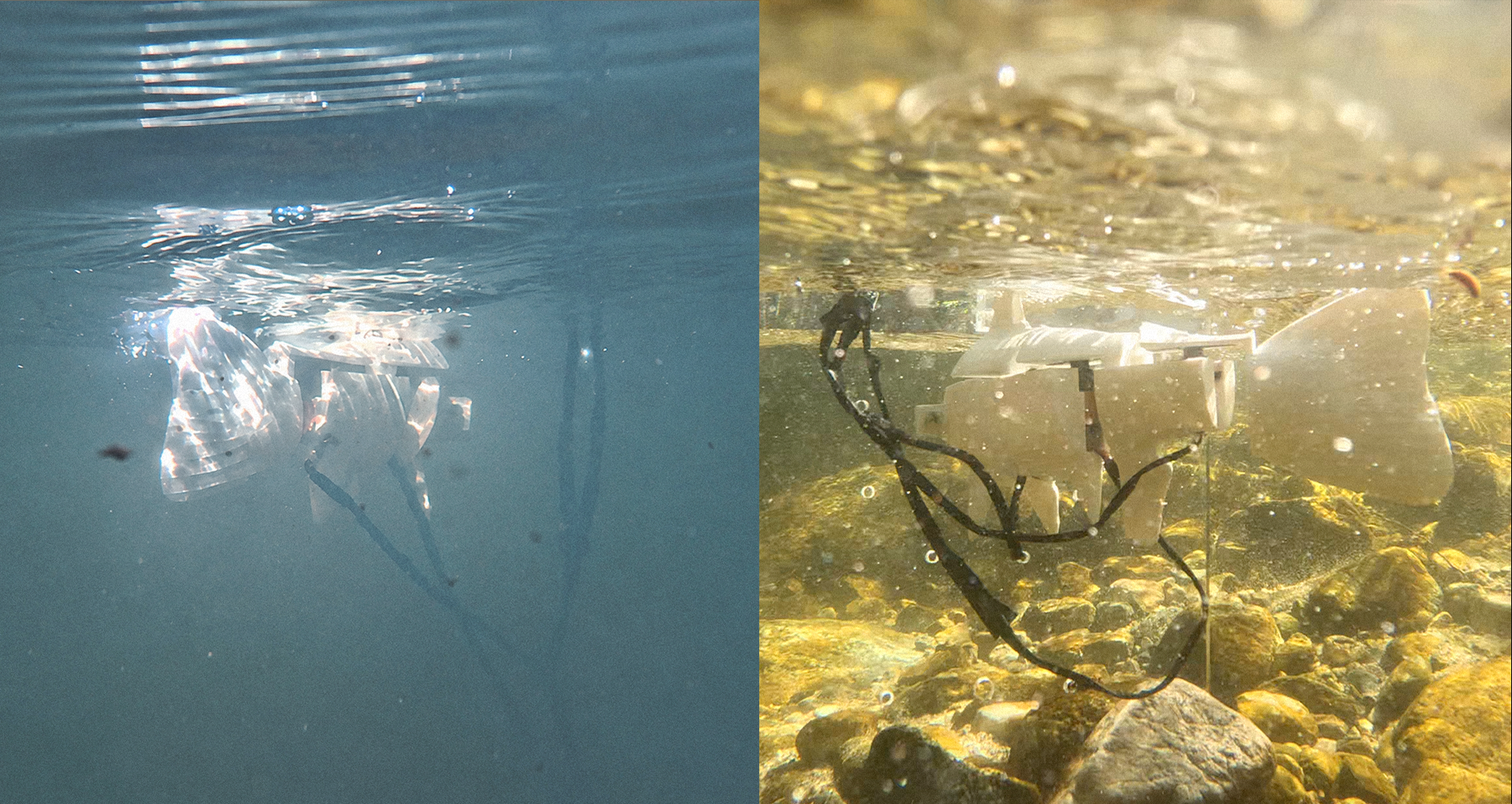
Trout Telephone is a telematic art installation that presents a communication system for trout across habitats fragmented by dam infrastructure. Grounded in field research around Devil’s Gate Dam in Los Angeles, the project centers on Oncorhynchus mykiss, a species that can remain in freshwater as resident rainbow trout or migrate to the ocean as anadromous steelhead. This river–ocean life cycle is now constrained by flood-control infrastructure, which blocks passage and cuts off upstream/downstream contact. Responding to this forced separation, the work places two mechanically actuated trout-tail sculptures at divided sites: one upstream in the forest, and one in a coastal lagoon. The project links them through a real-time network, creating a call-and-response system across the separated trout habitats. Each Trout Telephone station functions as a self-contained sensing-and-signaling node built with a microcontroller and a camera. A compact model trained and deployed runs on-device to detect trout presence in real time. When the model registers potential activity, the system sends a signal to the counterpart site. The receiving node drives a servo-actuated fish-tail sculpture, translating the remote detection into a tail-moving pattern that simulates trout movement and stirs water to send messages to the local fish. Audiences witness a fragile long-distance loop: fish presence becomes signal; signal becomes tail beat; tail beat becomes a hydrodynamic gesture across separation. By creating this speculative counter-infrastructure, Trout Telephone questions how human-built systems reorganize ecological power. It proposes a more-than-human model of ecological care and communication, where technological systems are reoriented toward nonhuman perception.
Project Collaborators:
Video Credits Director: Peijing Mou, Charlotte Shiyun Liu, Wendy Xinran Tong Camera: Charlotte Shiyun Liu, Peijing Mou Field Recording: Wendy Xinran Tong Editing: Peijing Mou Sound: Ze Hu