Drift Lattice
Theo Triantafyllidis
Artwork Description:
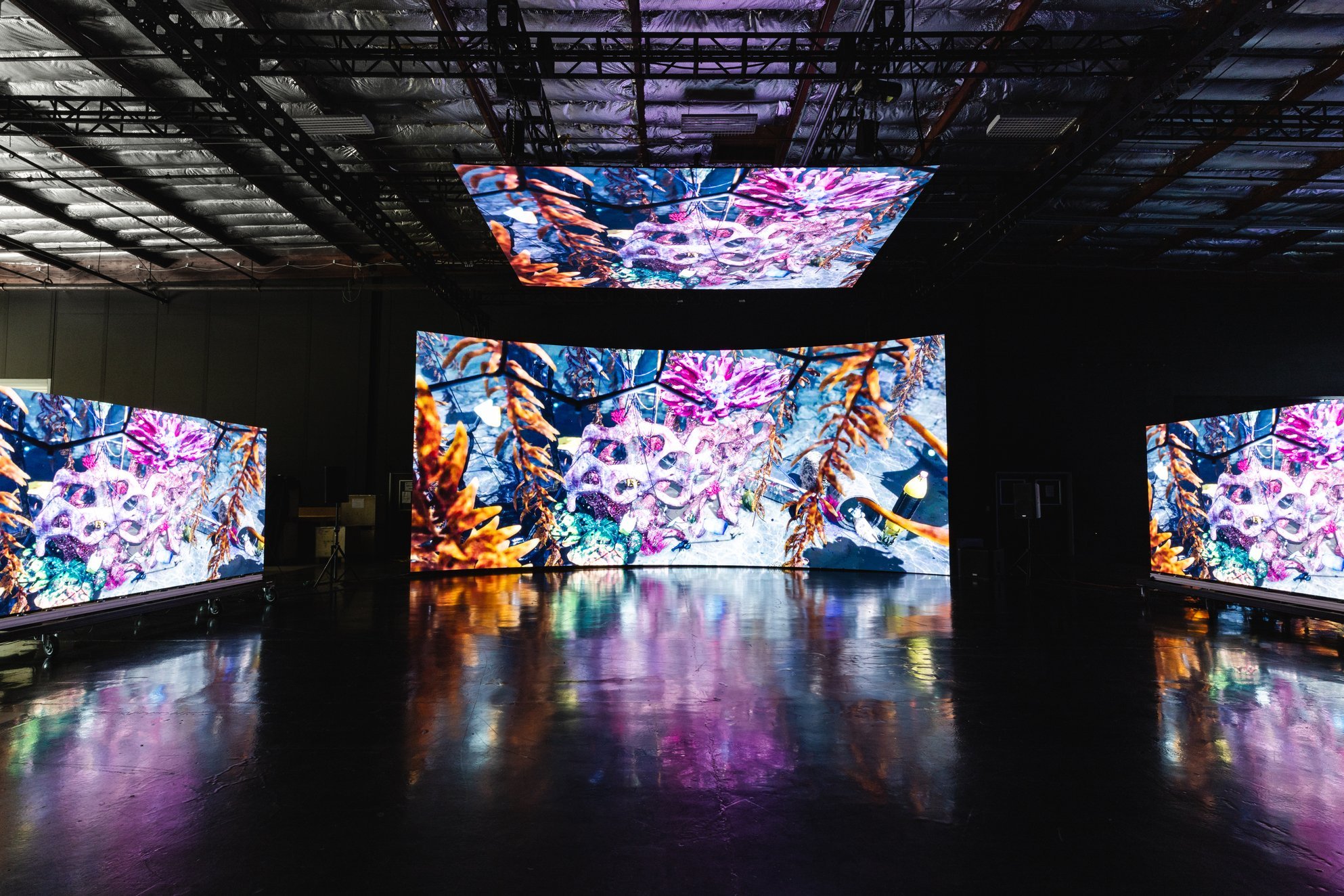
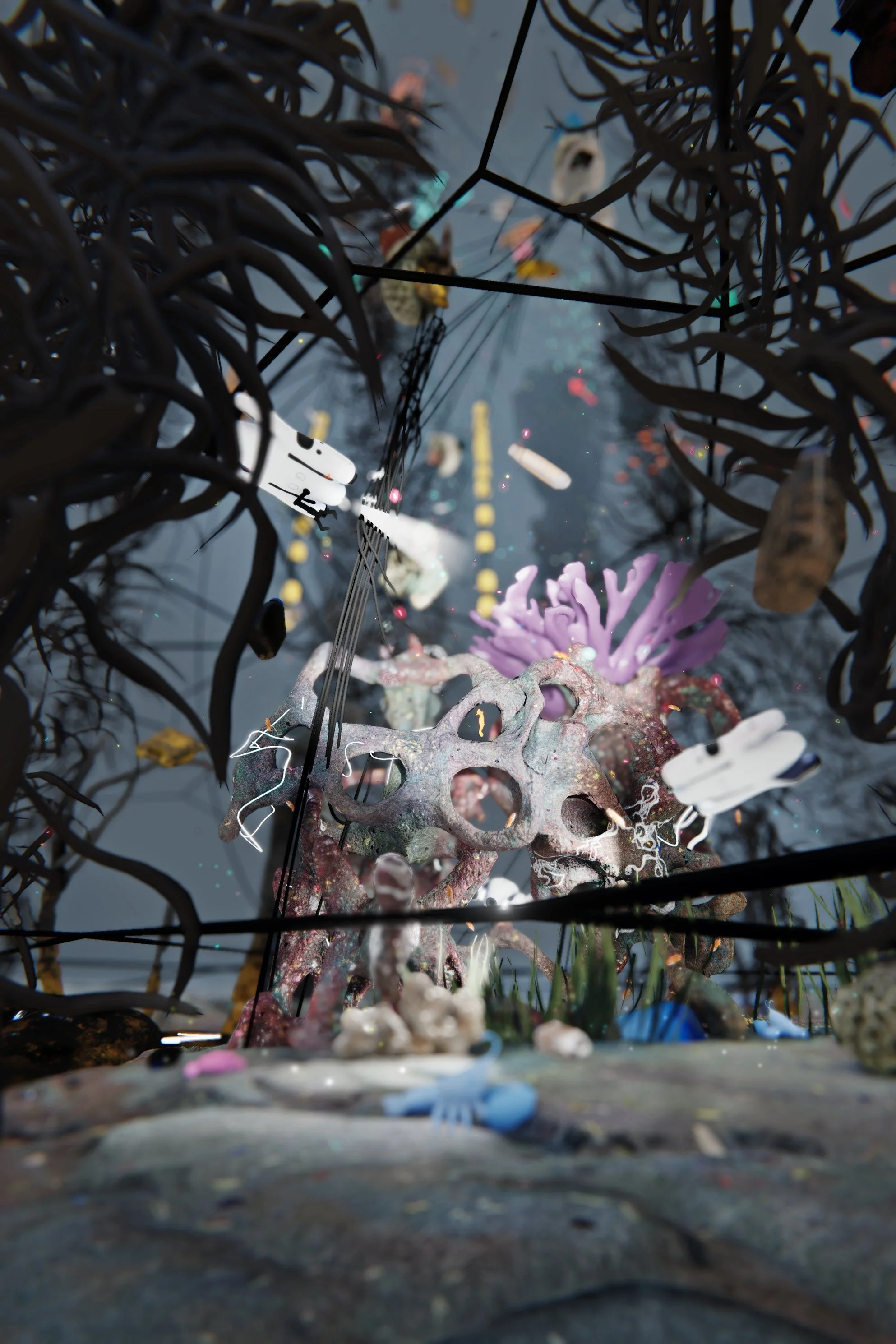
Drift Lattice invites viewers into a simulation of a vast, swirling underwater ecosystem where marine life and synthetic debris coexist in a complex, evolving environment. Aquatic species - crabs, fishes, and diving birds - move amidst entangled masses of seaweed, fishing nets, and discarded plastics, while autonomous cleanup drones navigate the currents, working to untangle and collect the detritus. The simulation’s dynamic state is continuously influenced by real-time data from global climate monitoring networks and oceanic research programs, mirroring the precarious health of real-world marine ecosystems and emphasizing the urgency of ecological action. This work continues Theo Triantafyllidis’s exploration of simulated ecosystems, following BugSim (Pheromone Spa) (2022). In BugSim, a microscopic world unfolds within a glass terrarium, where ants, bees, and other insects work together in a delicately balanced closed system, simulating the cycles necessary for environmental repair. Drift Lattice expands this inquiry to an oceanic scale, exploring resilience and entropy within a synthetic marine environment. The installation draws on concepts from James Bridle's Ways of Being and Holly Jean Buck’s After Geoengineering, reflecting on the distinct intelligences of human, artificial, and natural systems. By highlighting their interdependencies, the work underscores the necessity for collaboration between these modes of intelligence in addressing ecological challenges. It also touches on Buck’s discussion of large-scale oceanic interventions, such as kelp farms for carbon capture, positioning Drift Lattice as a speculative response to real-world environmental crises.
Project Collaborators:
Music by Diego Navarro Octopus Behaviour by Miles Peyton